Tell us about the job
Takes about a minute. No obligation.
Sizing a heat pump for Weld County starts with the cold months, not the mild ones. Homes in Weld County, CO run heat about eight months a year, from October through May. Heat pump capacity drops as outdoor temperatures fall, so a unit that performs well in October can struggle by January, leaning on electric resistance backup to close the gap. A contractor working an install here has to run a load calculation that accounts for that worst-case demand, not just average conditions, and has to specify a system whose rated capacity at low ambient temperatures actually covers the house. Get that sizing wrong and the backup heat elements carry load they were meant to handle only occasionally, wearing faster and costing more to run.
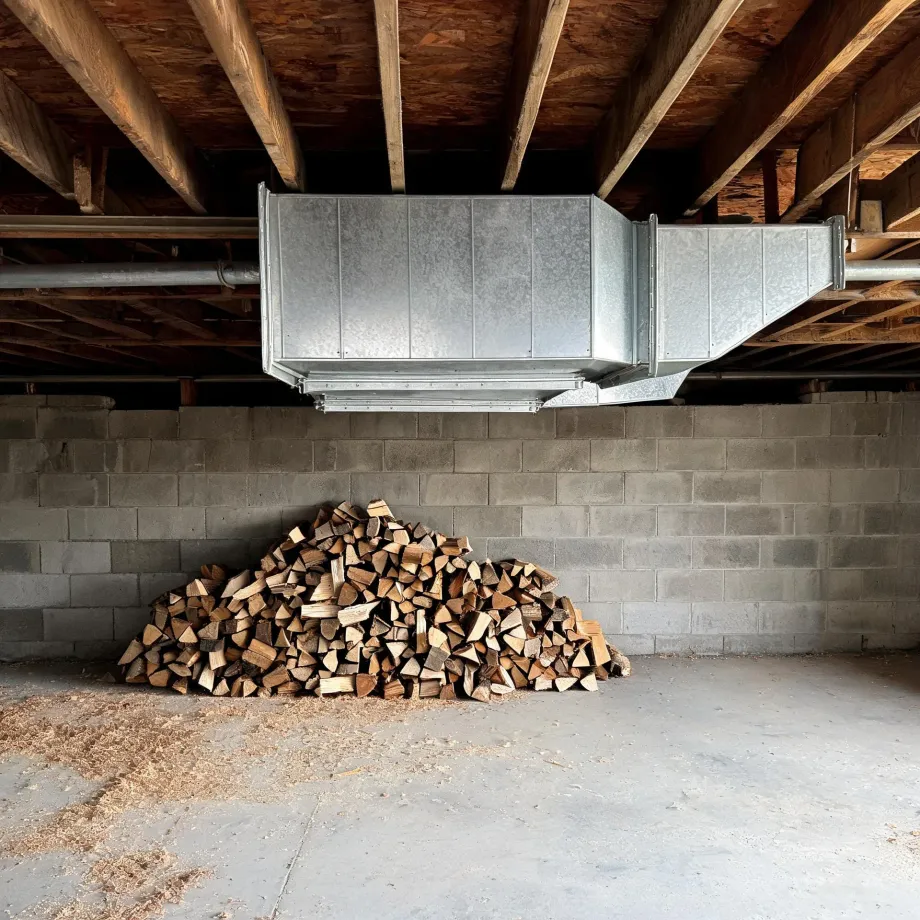
Ductwork sized for an older forced-air system handles pressure and airflow differently than a heat pump needs. Half the homes in Weld County, Colorado were built in 2001 or earlier (2020-2024 ACS 5-year). A contractor assessing a Weld County home for a heat pump installation checks whether the existing ducts will move air at the volumes the new unit requires, and whether the electrical service carries the load. Both are physical conditions in the house that a visual inspection and some measurements settle. Where the ductwork falls short, the contractor scopes it as part of the job.
What Gets Installed With a New Heat Pump
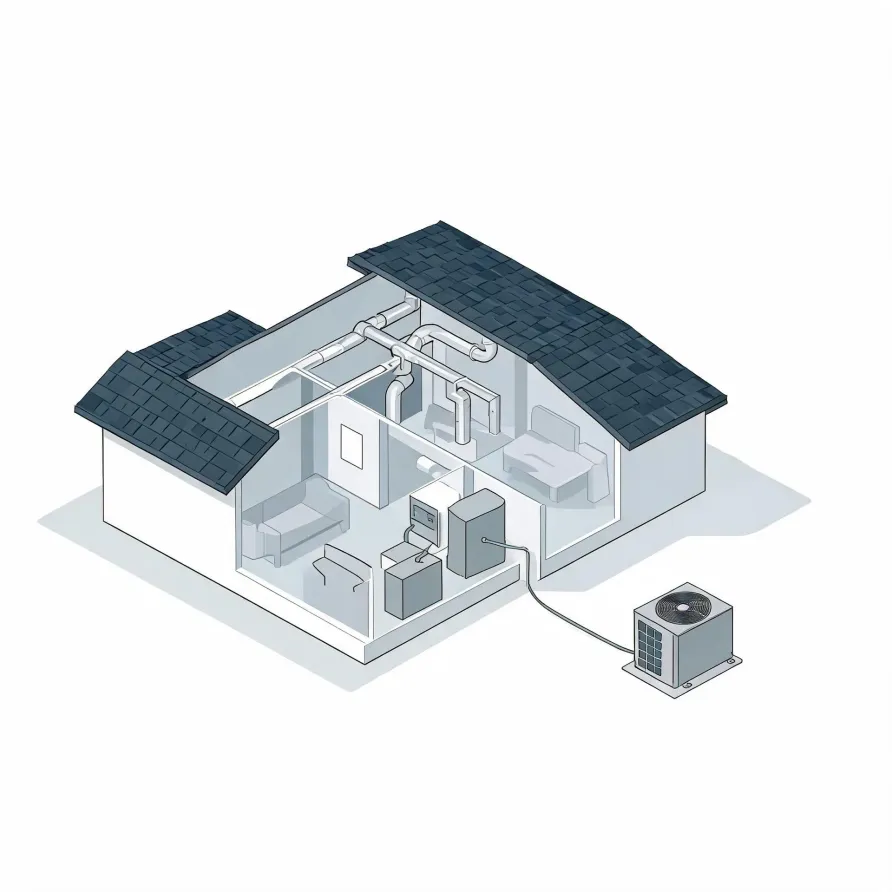
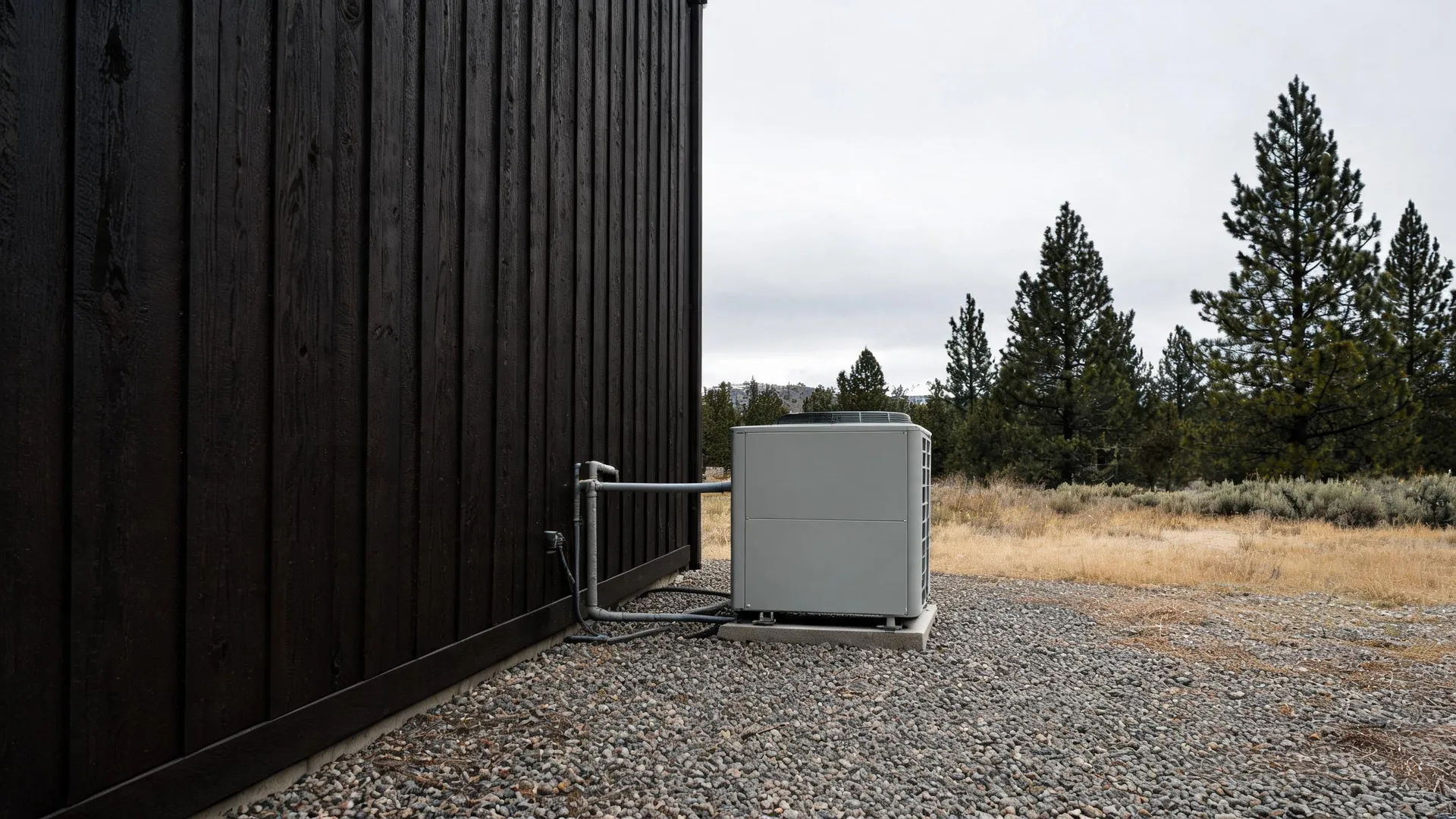
The outdoor unit is the piece most homeowners notice first. It sits on a concrete pad or wall brackets outside the house and holds the compressor and one set of coils. Inside, the air handler mounts in a utility space, attic, or closet and moves conditioned air through the home.
A refrigerant line set runs between the two units, carrying the working fluid back and forth through insulated copper tubing. A thermostat goes on an interior wall where it reads the living space temperature and tells the system when to run.
The drawing shows a typical layout, and a licensed contractor determines exactly how each piece fits the structure and setup of your house.
Get matched in Weld CountyWeld County, by the numbers
637 severe weather events were recorded in Weld County, Colorado between 2015 and 2024.
NOAA National Centers for Environmental Information, Storm Events Database, bulk CSV export, events 2015-01-01 through 2024-12-31.Half the homes in Weld County, Colorado were built in 2001 or earlier (2020-2024 ACS 5-year).
U.S. Census Bureau, 2020-2024 American Community Survey 5-Year EstimatesWeld County, Colorado holds 129,637 housing units (2020-2024 ACS 5-year).
U.S. Census Bureau, 2020-2024 American Community Survey 5-Year EstimatesOwners occupy 76.0% of the occupied homes in Weld County, Colorado (2020-2024 ACS 5-year).
U.S. Census Bureau, 2020-2024 American Community Survey 5-Year EstimatesSevere Weather Events in Weld County
Weld County weather puts real demands on heating and cooling equipment across every season. How hard a heat pump has to work, and how long it lasts, is shaped by local conditions, which is why this data belongs on a page about installation here.
637 severe weather events, 2015–2024. Source: NOAA National Centers for Environmental Information, Storm Events Database.