Tell us about the job
Takes about a minute. No obligation.
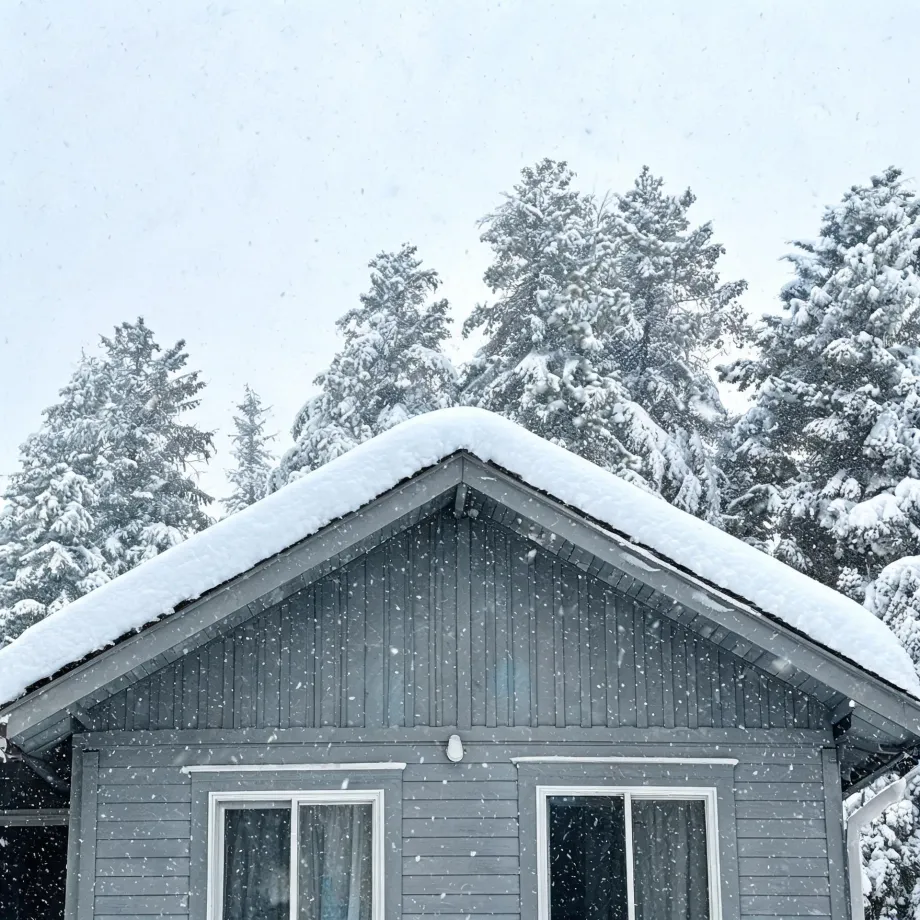
Sizing a heat pump for this county starts with understanding where outdoor temperatures actually fall, because a heat pump loses capacity as temperatures drop and the gap has to be covered somewhere. Homes in Larimer County, CO run heat about ten months a year, from September through June. A contractor has to determine how far below the balance point this house will regularly go, then specify backup heat that handles that gap without running the whole heating season. Get that wrong and the backup strip heaters carry loads the heat pump was supposed to, driving up operating costs in a way that was built in on installation day.
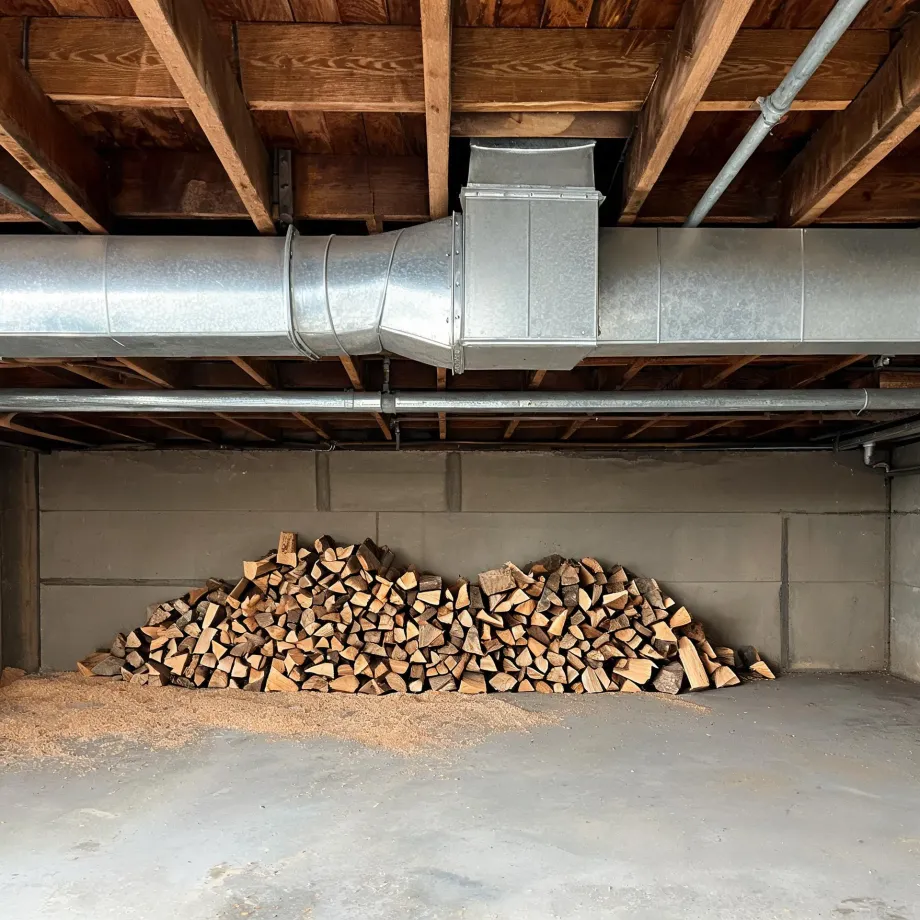
Ductwork and electrical service are what decide how a heat pump installation goes, and in Larimer County both of those deserve a look before the equipment gets chosen. Half the homes in Larimer County, Colorado were built in 1993 or earlier (2020-2024 ACS 5-year). A house built by that point was wired for a furnace and central air at loads a heat pump can exceed, so the panel a contractor finds may need an upgrade the homeowner was not expecting. Duct condition is a separate question the same visit answers.
What Gets Installed With a New Heat Pump
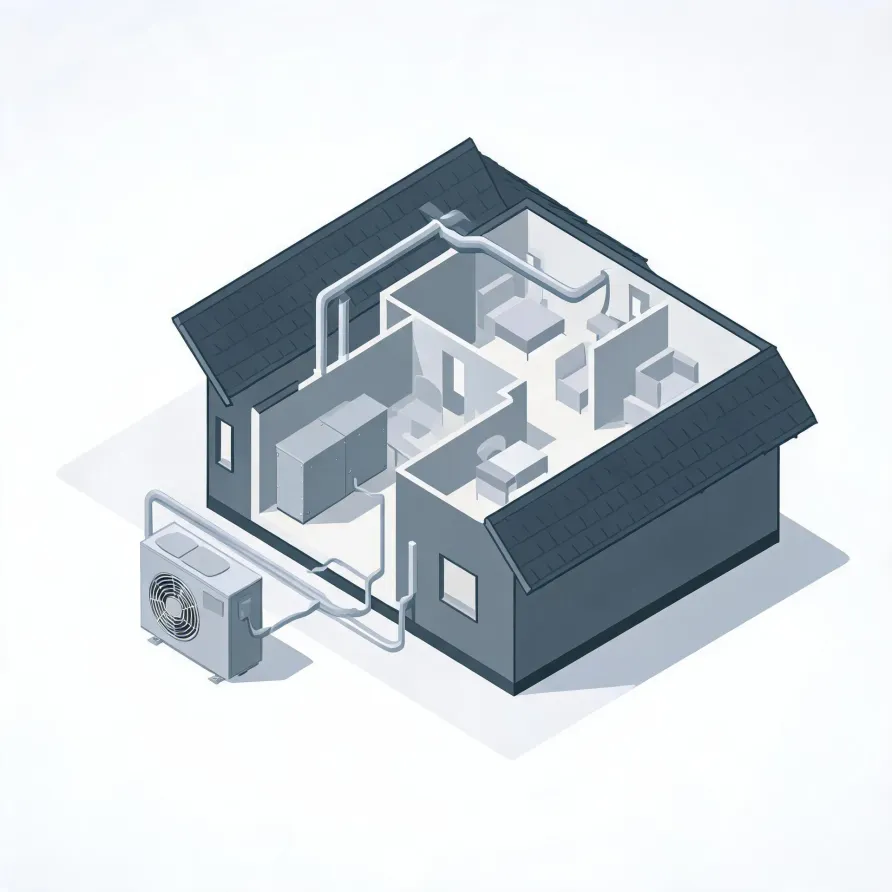
The outdoor unit is the piece a homeowner sees first, mounted on a pad beside the house, and it holds the compressor and the outdoor coil. Inside, the air handler sits in a utility space, basement, or closet and moves conditioned air through the home. These two units are the core of what a contractor puts in.
A refrigerant line set runs between the outdoor unit and the air handler, carrying the working fluid that makes the system function as one. A thermostat goes on an interior wall where a homeowner sets and reads the temperature, and a condensate drain line carries moisture away from the air handler to a floor drain or outside.
The drawing shows a representative layout, and a licensed contractor determines what fits the configuration of your particular house.
Get matched in Larimer CountyLarimer County, by the numbers
359 severe weather events were recorded in Larimer County, Colorado between 2015 and 2024.
NOAA National Centers for Environmental Information, Storm Events Database, bulk CSV export, events 2015-01-01 through 2024-12-31.Half the homes in Larimer County, Colorado were built in 1993 or earlier (2020-2024 ACS 5-year).
U.S. Census Bureau, 2020-2024 American Community Survey 5-Year EstimatesLarimer County, Colorado holds 164,690 housing units (2020-2024 ACS 5-year).
U.S. Census Bureau, 2020-2024 American Community Survey 5-Year EstimatesOwners occupy 64.0% of the occupied homes in Larimer County, Colorado (2020-2024 ACS 5-year).
U.S. Census Bureau, 2020-2024 American Community Survey 5-Year EstimatesSevere Weather Events in Larimer County
Larimer County weather puts real demands on heating and cooling equipment, and those demands shape what a heat pump needs to handle year after year. Sizing and installation decisions here are local decisions, and the weather record is part of that picture.
359 severe weather events, 2015–2024. Source: NOAA National Centers for Environmental Information, Storm Events Database.