Tell us about the job
Takes about a minute. No obligation.
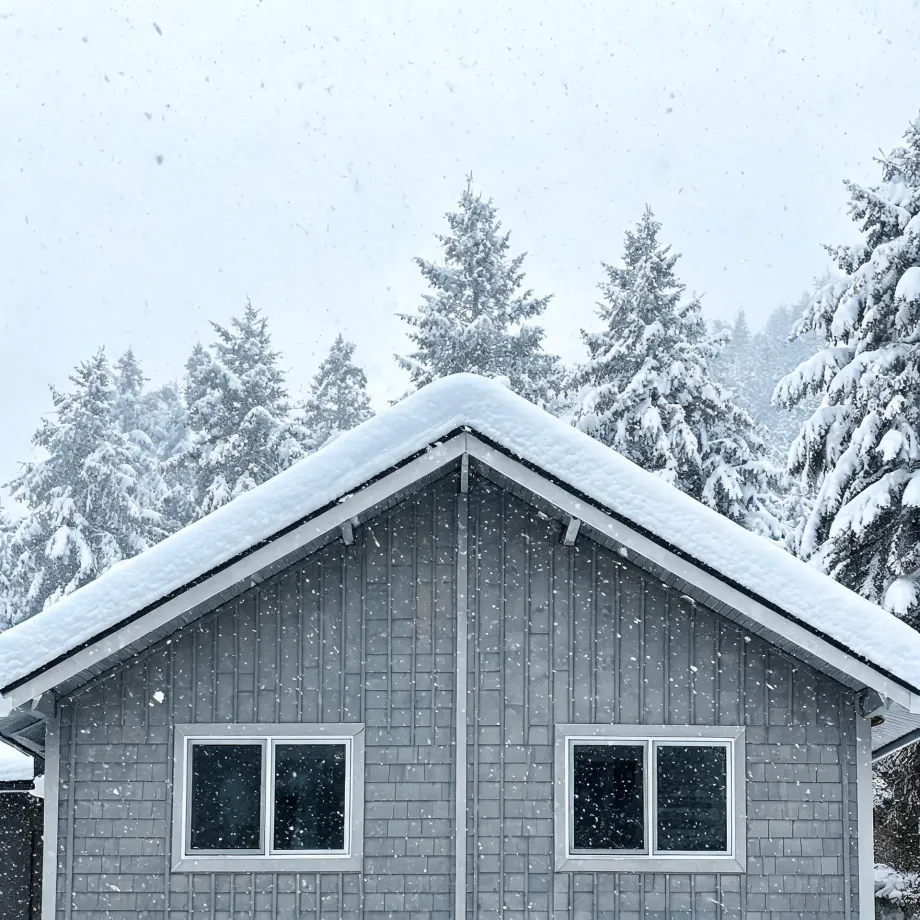
Sizing a heat pump for Eagle County starts with how cold it actually gets here, and how long that cold persists. Homes in Eagle County, CO run heat about eleven months a year, from August through June. A heat pump's capacity drops as outdoor temperatures fall, so a unit sized to the middle of the range will run short on the nights at the low end. The contractor has to establish the design temperature for this specific site before the equipment is specified, and that calculation also determines whether a backup heating source is needed and how large it should be.
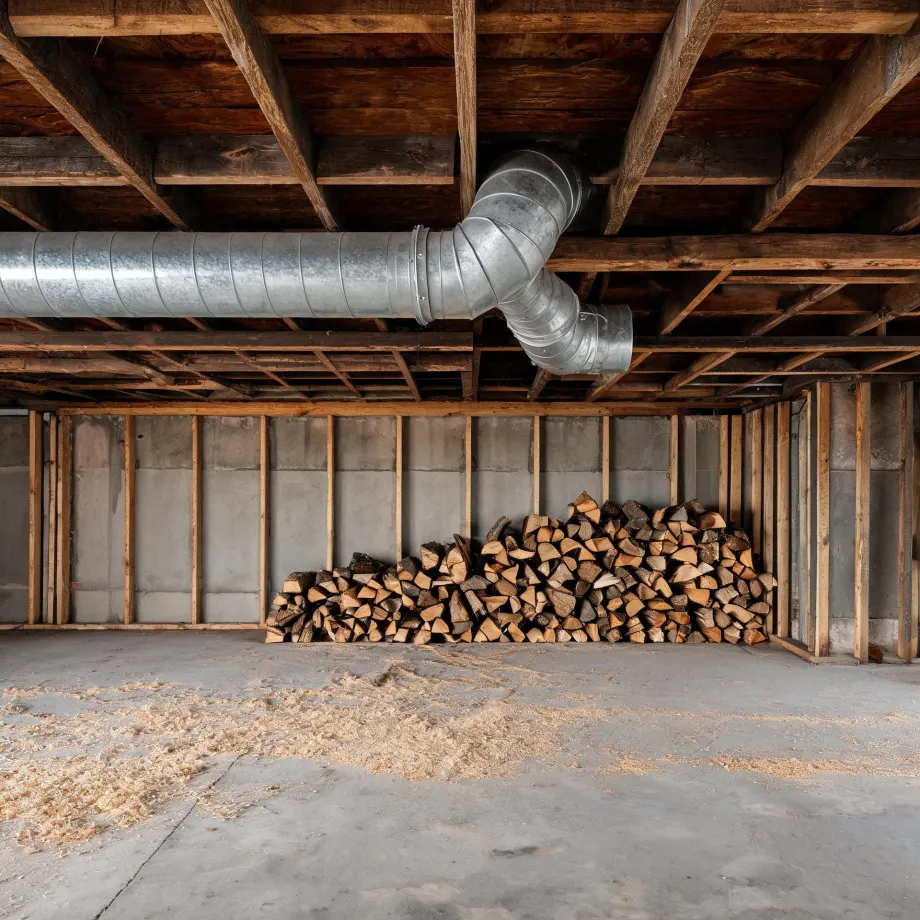
Existing ductwork is what shapes the scope of a heat pump installation here more than the equipment selection does. Half the homes in Eagle County, Colorado were built in 1993 or earlier (2020-2024 ACS 5-year). Ductwork laid in for older heating systems was sized around different airflow and static pressure than a heat pump demands, and a contractor has to assess what is already in the walls and ceiling before any equipment decision makes sense. The electrical service matters too, but duct layout is where the job either fits the house or it does not.
What Gets Installed With a New Heat Pump
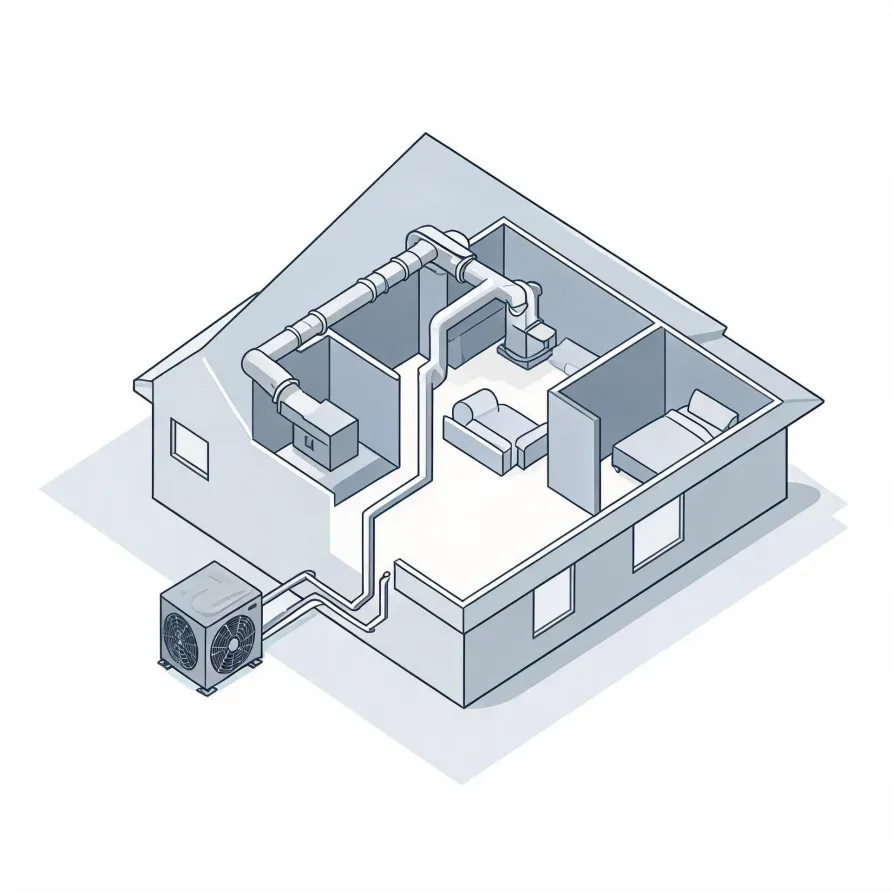
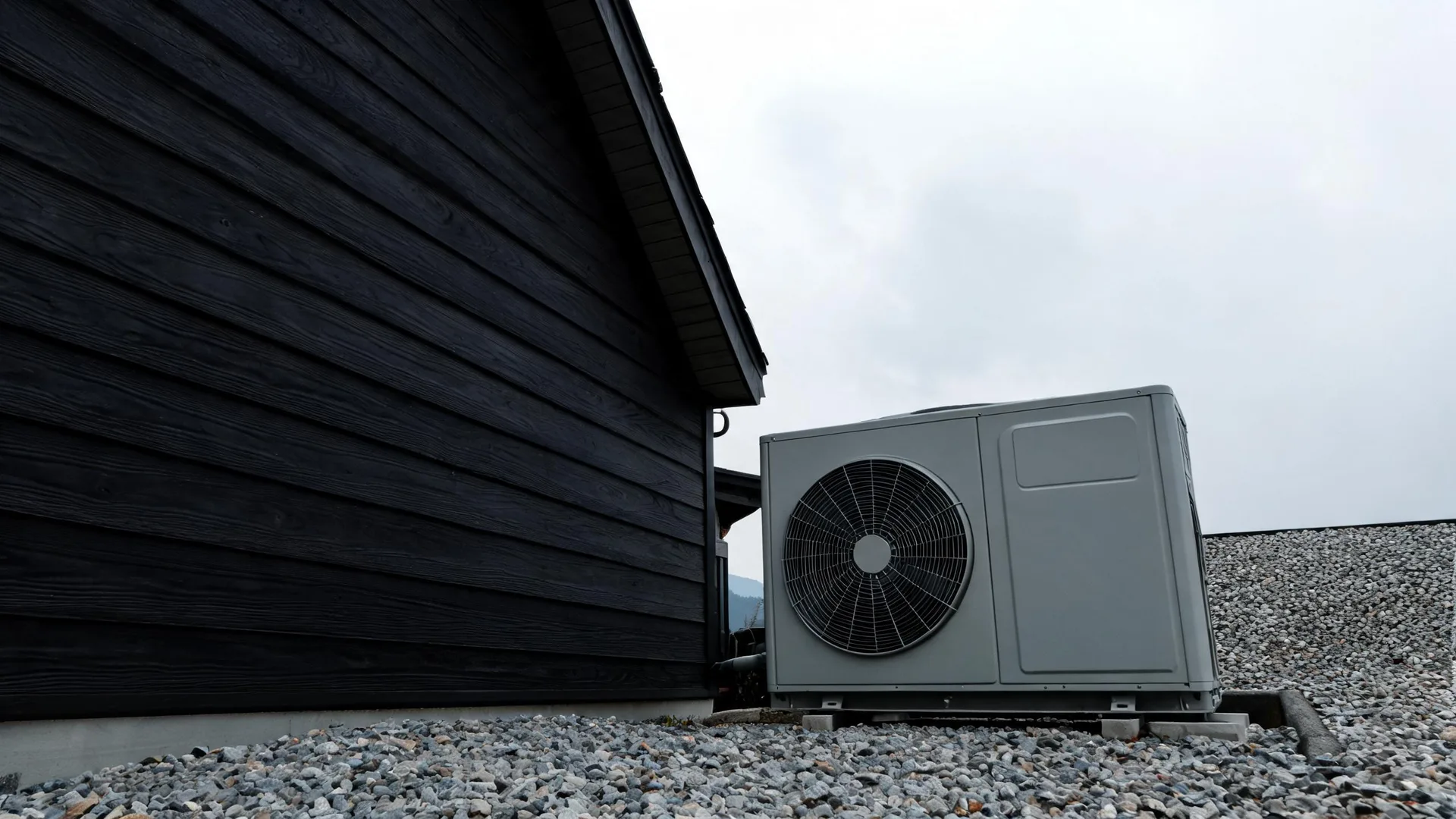
The outdoor unit is the piece a homeowner sees first, mounted on a pad beside the house, and it holds the compressor and the outdoor coil that do the core work of the system. Inside the house, the air handler sits in a utility closet, basement, or attic and moves conditioned air through the home.
A refrigerant line set runs between those two units, passing through an exterior wall to connect them. The thermostat goes on an interior wall and gives the homeowner control over the whole system. Some installations also include a supplemental heat strip inside the air handler for periods of heavy cold.
The drawing beside this text shows the general layout of these components, and a licensed contractor determines exactly how they are configured in your home.
Get matched in Eagle CountyEagle County, by the numbers
158 severe weather events were recorded in Eagle County, Colorado between 2015 and 2024.
NOAA National Centers for Environmental Information, Storm Events Database, bulk CSV export, events 2015-01-01 through 2024-12-31.Half the homes in Eagle County, Colorado were built in 1993 or earlier (2020-2024 ACS 5-year).
U.S. Census Bureau, 2020-2024 American Community Survey 5-Year EstimatesEagle County, Colorado holds 33,915 housing units (2020-2024 ACS 5-year).
U.S. Census Bureau, 2020-2024 American Community Survey 5-Year EstimatesOwners occupy 65.9% of the occupied homes in Eagle County, Colorado (2020-2024 ACS 5-year).
U.S. Census Bureau, 2020-2024 American Community Survey 5-Year EstimatesSevere Weather Events in Eagle County
Heat pump performance is tied directly to what the climate demands of it year over year. How hard equipment works in Eagle County shapes what size and spec a contractor installs.
158 severe weather events, 2015–2024. Source: NOAA National Centers for Environmental Information, Storm Events Database.