Tell us about the job
Takes about a minute. No obligation.
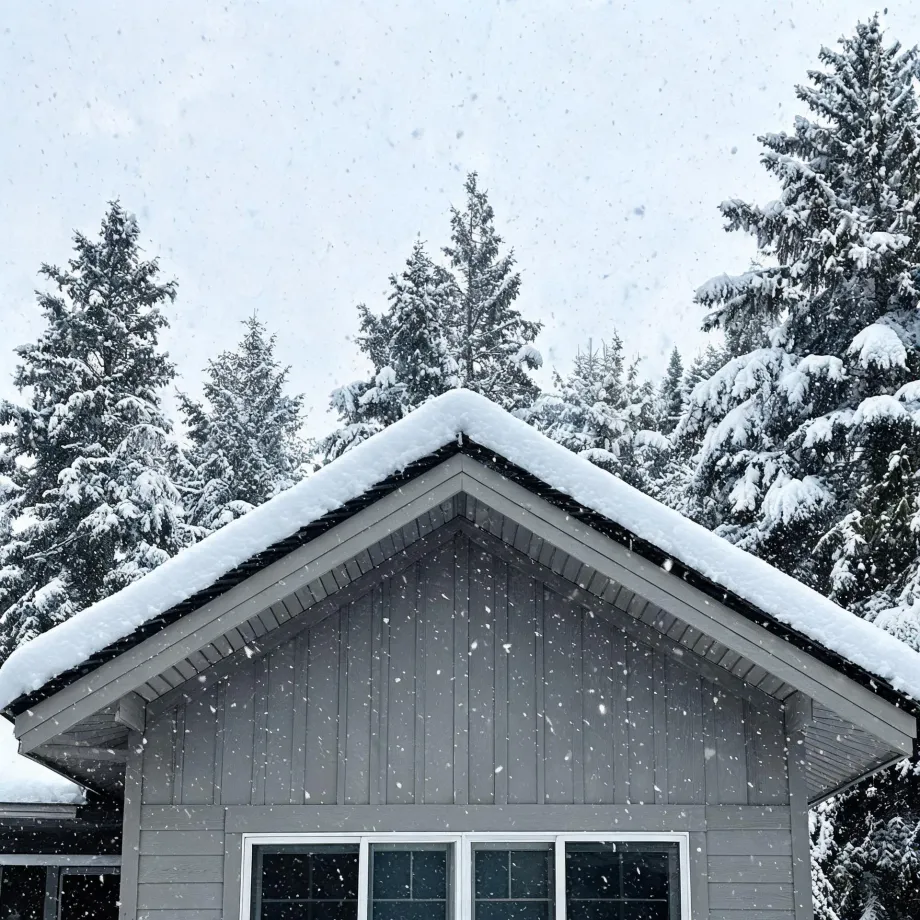
A contractor quoting a heat pump installation in Gunnison County has to solve two problems, not one. Homes in Gunnison County, CO run heat in every month of the year. A heat pump loses capacity as outdoor temperatures fall, and this county pushes that limitation hard through a long winter. The primary unit has to be sized for what it can deliver at the coldest point of the season, and the backup heat source has to carry whatever gap remains. A contractor who treats backup heat as an afterthought leaves the homeowner with a system that leans on resistance strips heavily and expensively through the coldest stretches.
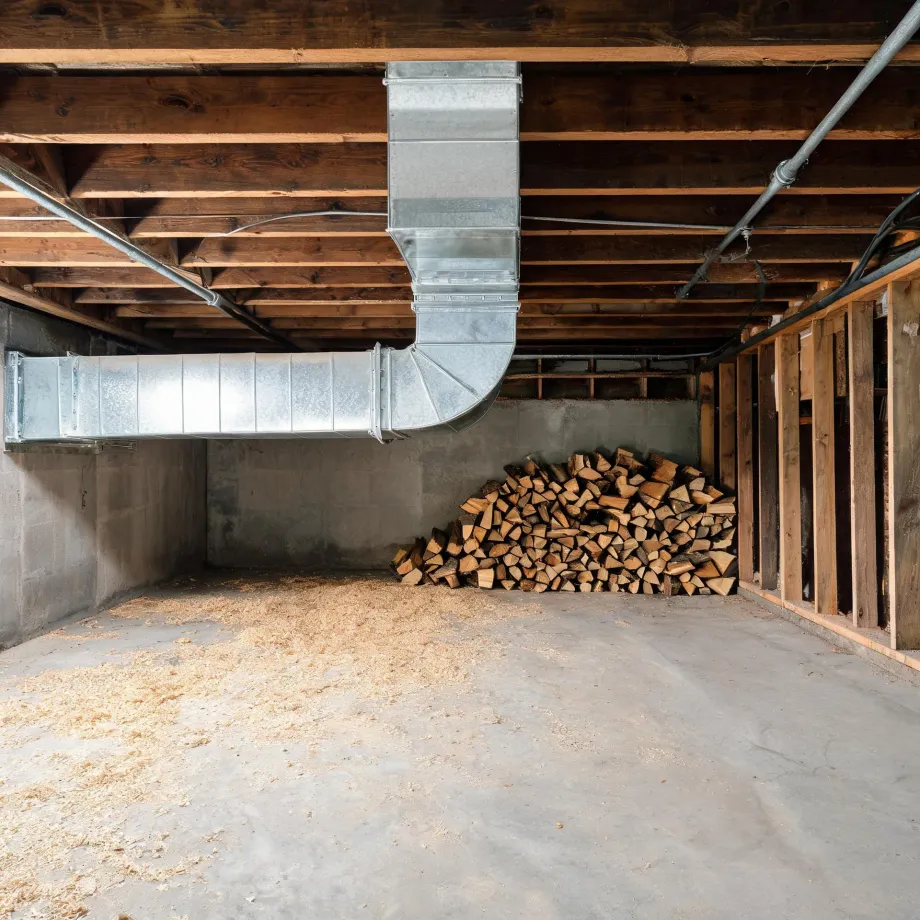
Ductwork laid out for an earlier generation of heating equipment and service panels sized for a lighter electrical load are what a heat pump contractor is working around in a large share of Gunnison County homes. Half the homes in Gunnison County, Colorado were built in 1987 or earlier (2020-2024 ACS 5-year). That depth of housing history puts the real variables of a heat pump installation in the walls and the utility room: whether existing duct runs move enough air volume for a modern system, and whether the panel can handle the draw. The equipment selection follows from those answers.
What Gets Installed With a New Heat Pump
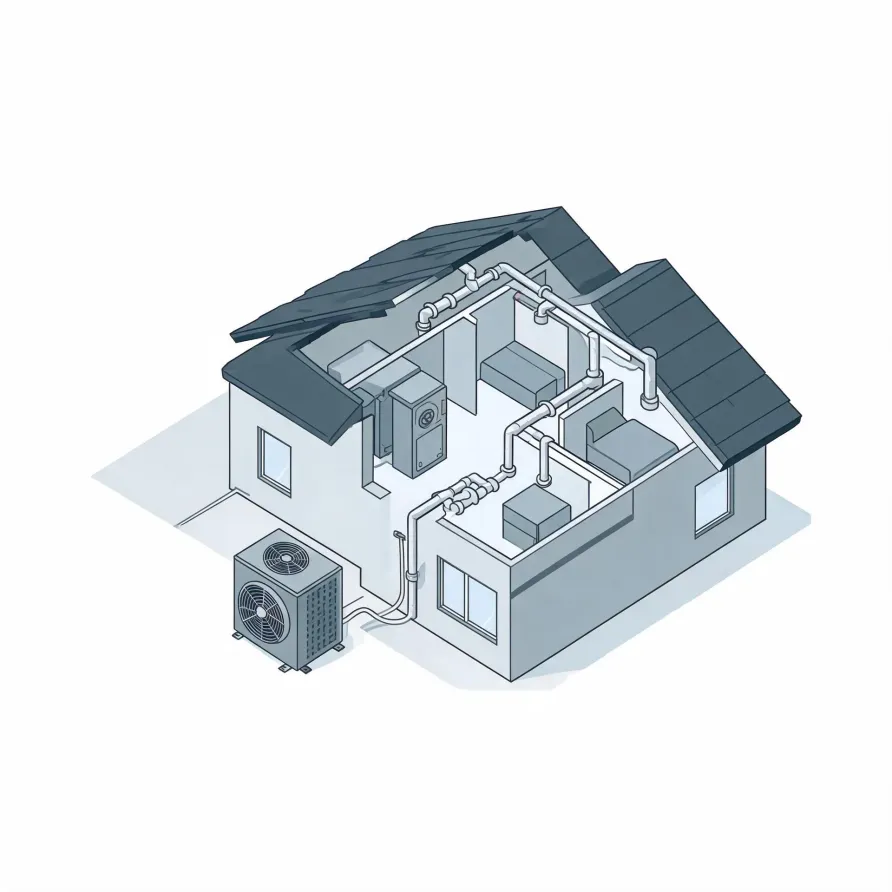
The outdoor unit is the piece most homeowners see first, a cabinet that sits on a pad beside the house and holds the compressor and the outdoor coil. Inside, an air handler mounts in a utility space, closet, or attic and circulates conditioned air through the home. These two units are the core of what a contractor puts in.
A refrigerant line set runs between the outdoor unit and the air handler, carrying refrigerant through insulated copper tubing that a contractor routes along an exterior wall or through the attic. A thermostat goes on an interior wall where the homeowner can reach it, and a condensate drain line runs from the air handler to a nearby drain to carry away moisture.
The drawing shows a representative layout, and a licensed contractor determines exactly how each piece is positioned and connected in your specific home.
Get matched in Gunnison CountyGunnison County, by the numbers
188 severe weather events were recorded in Gunnison County, Colorado between 2015 and 2024.
NOAA National Centers for Environmental Information, Storm Events Database, bulk CSV export, events 2015-01-01 through 2024-12-31.Half the homes in Gunnison County, Colorado were built in 1987 or earlier (2020-2024 ACS 5-year).
U.S. Census Bureau, 2020-2024 American Community Survey 5-Year EstimatesGunnison County, Colorado holds 12,506 housing units (2020-2024 ACS 5-year).
U.S. Census Bureau, 2020-2024 American Community Survey 5-Year EstimatesOwners occupy 66.8% of the occupied homes in Gunnison County, Colorado (2020-2024 ACS 5-year).
U.S. Census Bureau, 2020-2024 American Community Survey 5-Year EstimatesSevere Weather in Gunnison County
The conditions a heat pump works through shape how hard it runs and how long it lasts. Gunnison County's weather record is part of what determines the right equipment and the right installation for this location.
188 severe weather events, 2015–2024. Source: NOAA National Centers for Environmental Information, Storm Events Database.