Profile view of a bearded man wearing a black baseball cap and a dark gray T-shirt against a plain light background.

Why your heat pump makes noise in a Colorado winter

Step 1 of 3: Equipment

A heat pump that clicks, hums, or buzzes during a Colorado winter is usually just going through its defrost cycle. Cold air holds little moisture, but what moisture is there freezes on the outdoor coil when temperatures drop toward freezing and below, which happens often once winter sets in. The unit senses the frost, reverses itself briefly to melt it off, and a reversing valve switching back and forth will click. A whoosh or hiss during that cycle is the refrigerant changing direction. None of that is a sign of trouble by itself. What is worth paying attention to is a noise that doesn't go away when defrost ends, or one that is new and getting louder. That can point to a loose panel, a failing motor, or ice that isn't clearing like it should. Catching that early, before it turns into a system that can't keep the house warm, is a lot easier than fixing it after the fact.

A woman in a gray turtleneck sweater stands by a window looking outside at snowy ground, with a dimly lit living room containing a sofa, shelves, lamp and a lit candle behind her.
A woman in a cream cable-knit turtleneck sweater stands in a warmly lit living room with a fireplace and shelves behind her, looking out a window toward snow-covered trees and a railed deck.
A woman in a cream knit turtleneck sweater stands by a window looking out at snow, with a lit fireplace, sofa and lamp in the room behind her.
A woman in a gray knit sweater sits by a window looking out at falling snow, with a dimly lit living room containing a sectional sofa, pillows, a lamp and houseplants behind her.

What the defrost cycle sounds like

A reversing valve shifts with a clunk when the system switches into defrost and again when it switches back to heating. The outdoor fan stops, which changes the pitch of the unit, and you may hear a hiss as hot refrigerant moves through the coil to melt the ice off it. None of that is the compressor straining. It is the system doing what it was built to do when the coil frosts up, and it should settle back into a steady hum once the cycle ends and the outdoor fan starts again.


When the noise means something else

A heat pump that bangs on startup, grinds, or buzzes continuously while the outdoor fan is running is not describing defrost. Ice that builds up and never clears, even after several cycles, points to a stuck reversing valve or a sensor that isn't telling the system when to defrost. Short cycling, where the unit clicks on and off every few minutes in cold weather, is also outside the normal pattern. Those are the sounds worth having a contractor look at before a cold snap turns a small issue into a system that can't keep the house warm at all.

An outdoor air conditioner condenser unit on a concrete pad beside a house with horizontal siding above a concrete block foundation, with insulated refrigerant lines and a vertical white pipe on the wall.
Before you get your heat pump repair
A gray outdoor heat pump unit on a concrete pad beside a house with horizontal lap siding, connected by conduit and a flexible line to a wall-mounted disconnect box, with low shrubs and mulch nearby.
After you get your heat pump repair

Your heat pump's control board keeps watch on a sensor mounted right on the outdoor coil. Once that coil gets cold enough, the board starts checking every thirty to ninety minutes to see if frost has built up enough to need clearing. When it decides defrost is needed, the system reverses itself for a few minutes, running backward like an air conditioner so hot refrigerant flows through the outdoor coil and melts the frost off. That's why you lose heat from your vents for a short stretch, and why a gas furnace or electric strip heat often kicks on to cover the gap. The board ends the cycle one of two ways, either the coil sensor reports it's clear or a set amount of time runs out, whichever happens first. Then the valve clunks back and the outdoor fan picks back up. If what you're hearing is a handful of clunks and a change in fan noise that wraps up inside ten or fifteen minutes, that's the system doing exactly what it's supposed to do in a Colorado winter.

How defrost actually works

  • The defrost cycle runs on a timer, often checking every thirty to ninety minutes once the outdoor coil drops near freezing.
  • A sensor on the outdoor coil tells the control board how cold and frosted it is before defrost is allowed to start.
  • During defrost the system briefly runs in cooling mode backward, pulling heat from inside to melt the frost outside.
  • A backup heat source, gas furnace or electric strip heat, often kicks on during defrost to keep the air from your vents warm.
  • The cycle ends either when the coil sensor reads clear or when a set amount of time has passed, whichever comes first.
  • Short, regular clunks and hums that start and stop within ten or fifteen minutes point to a normal defrost cycle rather than a problem.
A bearded man in a plaid flannel shirt stands in a kitchen looking out a window toward snow-covered shrubs, with a steaming mug on the windowsill and potted plants on a shelf behind him.
A smiling man with dark curly hair in a navy t-shirt sits on a gray couch indoors, with a large-leafed plant and a window in the background.
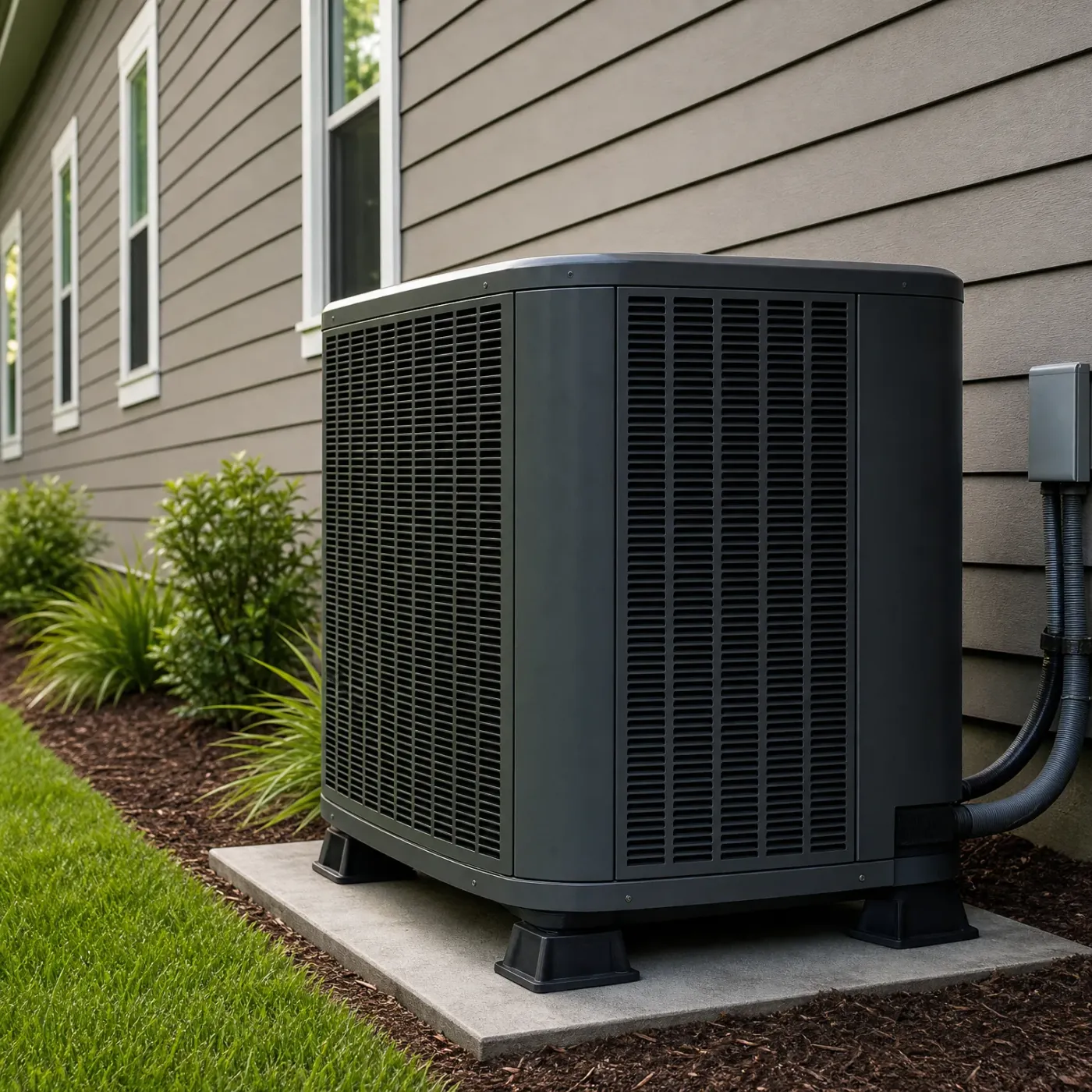
A dark gray outdoor condenser unit on a concrete pad beside a house with horizontal lap siding, with mulch beds, shrubs, and lawn nearby and conduit running to a wall-mounted box.

Get your heat pump to the right pro

Send it once and finding someone is no longer on you.

Say what's going on with your heat pump, and a pro who works on them reaches out.

Get a heat pump pro

You're not committing to anything by asking.

A gray outdoor heat pump unit on a concrete pad beside a house with horizontal lap siding, with a conduit running to a wall-mounted disconnect box and a green shrub to the left.
A heat pump running a normal defrost cycle in Colorado cold, with sounds that start and stop on their own schedule.
An outdoor air conditioning condenser unit with dusty coils sits on a concrete pad against light horizontal siding, with an electrical disconnect box and refrigerant lines on the wall and a shrub and mulch at left.
A heat pump working through grime and strain that turn a quiet hum into grinding or a sound that never lets up.
  1. The control board senses the outdoor coil getting cold and frosted.

  2. The reversing valve clunks as the system switches into defrost.

  3. The outdoor fan shuts off, changing the pitch of the unit.

  4. Hot refrigerant reverses through the coil, melting frost in minutes.

Is this your heat pump or something worse

Most of what you're hearing is the unit doing its job in the cold. But a few things are worth paying attention to. If the outdoor fan rattles or grinds instead of just changing pitch, that's not defrost, that's a bearing or a blade hitting ice buildup it shouldn't have. If the clunk from the reversing valve turns into a bang, or the unit cycles into defrost every few minutes instead of every half hour or more, something is telling the control board the coil is colder than it should be. Left alone through a Colorado winter, that strain can wear down a part that was fine in November and dead by February, right when you need the heat most.

A two-story gray horizontal-siding house with multiple gables, a covered front porch with white columns and railing, and a dark front door, fronted by a patchy green and brown lawn under a clear blue sky.

Summers in Colorado are dry, with a dew point that averages 42°F across June, July and August, according to NOAA climate data. That dry air is easy on your heat pump's outdoor coil most of the year, which is part of why winter sounds stand out so much. Once cold weather moves in, the little moisture the air does hold turns to frost on that same coil, and the unit has to run defrost to clear it. The clunks and pitch changes you hear in January are the system handling a job it barely has to deal with in July or August.

NASA POWER T2MDEW county cells weighted by homes

Normal defrost or a real problem

Normal defrost

  • The clunk from the reversing valve happens twice, once going into defrost and once coming back out, then stops.
  • The outdoor fan pitch changes or the fan stops outright for a few minutes at a time, then picks back up.
  • A hiss or gurgle while hot refrigerant moves through the outdoor coil fades once the cycle ends.
  • These sounds come and go on their own, matching the thirty to ninety minute check the control board runs.
  • Steam or light fog off the outdoor unit during defrost is just melted frost, not a sign of trouble.
  • Nothing about the sound gets louder or rougher the longer winter goes on.

Needs a look

  • A grinding or scraping sound from the outdoor fan instead of a simple change in pitch points to a worn motor bearing.
  • Rattling that doesn't stop when defrost ends usually means something loose, like a fan blade or panel screw.
  • A sound that runs constantly instead of starting and stopping on its own schedule isn't the defrost timer anymore.
  • Ice building up on the unit and staying there instead of melting off during defrost means the cycle isn't finishing.
  • A buzz that gets louder over a few weeks instead of staying the same points to strain on a part, not the cold.
  • If the reversing valve clunks but the unit keeps blowing cold air afterward, the valve may not be switching back fully.
A gray outdoor condenser unit on a concrete pad beside a house with horizontal lap siding, with a wall-mounted disconnect box, conduit and insulated refrigerant lines, a shrub at left and gravel at right.

Running clean

This is what a heat pump looks like when nothing is wrong with it. The lines and conduit run straight up the wall to the disconnect, the pad is clear, and the gravel bed around it is undisturbed. A unit in this shape can still clunk and hiss through a Colorado winter and be fine.

An outdoor air conditioning condenser unit on a concrete pad beside a house with horizontal lap siding, with a green shrub to the left and a wide concrete slab in the foreground.

Running rough

Same kind of unit, bare concrete pad, nothing to catch debris or slow airflow around the base. If a unit like this starts grinding instead of changing pitch, or runs through a frost cycle without ever stopping to reverse, that's wear talking, not the cold.

Power costs 15.69 cents per kilowatt-hour statewide

At 15.69 cents per kilowatt-hour, your heat pump is already one of the cheaper ways to heat your house compared to running electric resistance heat. The defrost cycle itself uses only a little extra power to run the fan and reversing valve. A grinding fan or a motor straining against ice costs more to run and wears out faster, so catching that noise early keeps your bill closer to what it should be.

EIA-861 2025 statewide residential average

A man seen from behind raises his hand to wave at a woman standing in the open front doorway of a single-story house with gray shingle siding, white columns and a gabled porch entry.

So the sound alone isn't the answer

A clunk twice a cycle and a fan that changes pitch is your heat pump doing what it's built to do in Colorado cold. A grinding fan, a rattle that doesn't stop, or a hum that never lets up is something else, and that's the part worth having someone look at. You don't need to guess which one you've got by ear alone, especially if it's new to you or you're not sure what your unit sounded like last winter.

If you've gone through the list above and still aren't sure, that's a reasonable place to stop deciding on your own. A contractor who works on heat pumps in this kind of cold can tell you in minutes what the sound means for your unit specifically, not a general one. Send the details in and the search for who to call is off your plate. Someone who covers your part of Colorado and knows this equipment will be in touch.

A living room corner with a light beige sofa holding a textured taupe cushion, a large ceramic vase of olive branches by a window, a framed neutral artwork on the wall, and a dark bowl with stacked books in the foreground.
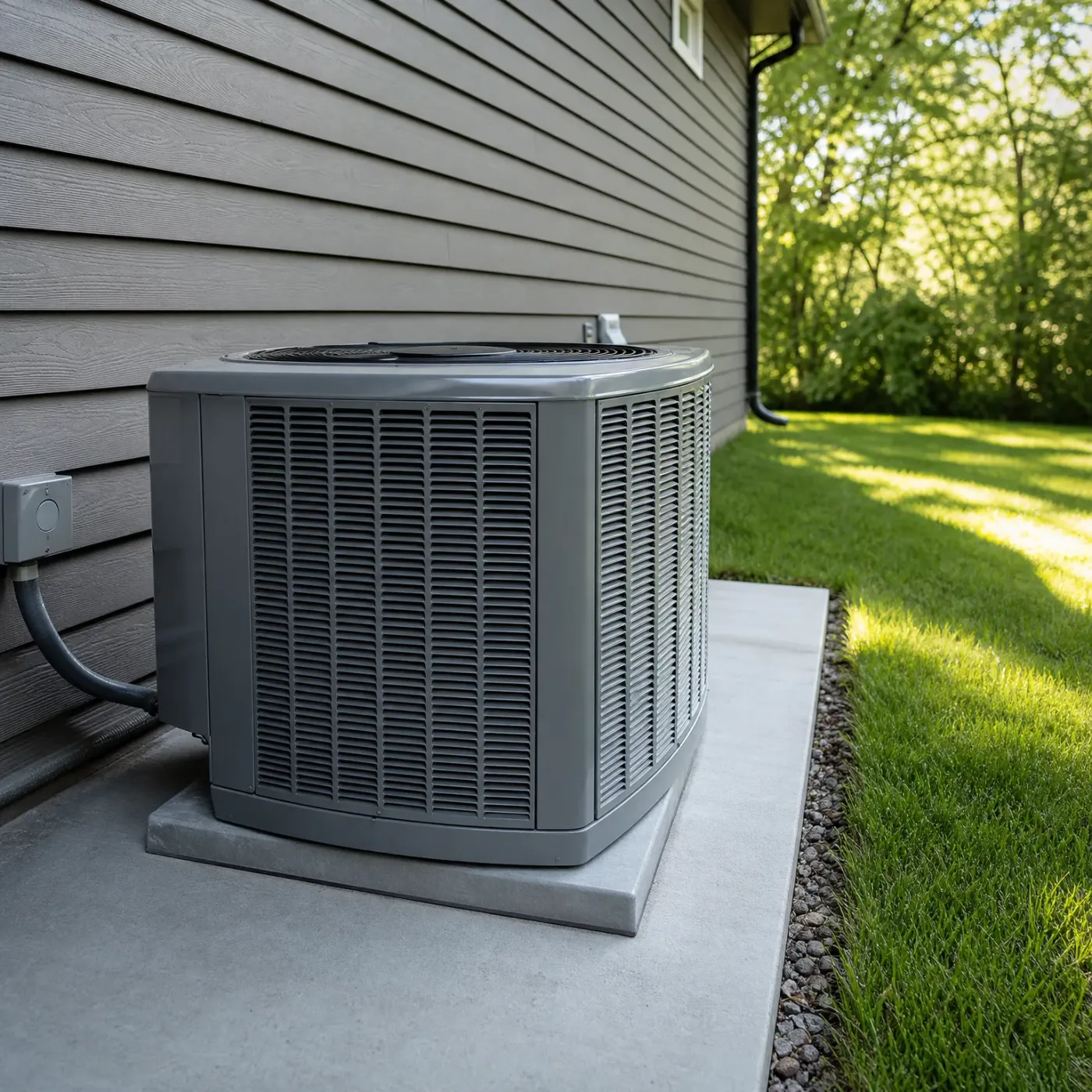
A gray outdoor air conditioner condenser unit on a concrete pad beside a house with horizontal lap siding, with an electrical disconnect box and conduit on the wall, a downspout, gravel edging and a green lawn with trees to the right.

The right pro for this job

Connect with a pro

Send the request today and let a heat pump pro reach out to you.

It costs nothing to send, and you don't have to hire anyone.