
Why your heat pump bill jumps in a Colorado winter

Step 1 of 3: Equipment

Your bill jumps because a heat pump works harder as the outdoor temperature drops, and Colorado winters push it into that hard range for weeks at a time. Below about 35 to 40 degrees, the unit pulls less heat from the outside air and leans on backup electric heat strips to keep up, and those strips use a lot of power fast. Frost on the outdoor coil makes it worse. The system has to pause and run a defrost cycle to clear the ice, and during that cycle it's often drawing backup heat too. None of this means something is broken. It's how a heat pump is built to respond to cold. But a system that's low on refrigerant, has a failing defrost control, or has a coil that's dirty will lean on those heat strips more than it should, and that shows up directly on your bill before you ever notice a comfort problem.

A gray outdoor condenser unit on a concrete pad beside a house with horizontal lap siding, with a wall-mounted disconnect box, conduit and insulated refrigerant lines, a shrub at left and gravel at right.

Running normally in cold weather

A heat pump working as it should still runs long stretches once it's below freezing outside. The outdoor unit stays mostly free of heavy ice, cycles on and off instead of running nonstop, and your home holds its set temperature without the backup heat kicking in every hour.


An outdoor condenser unit on a concrete pad beside a horizontal-sided house, with insulated refrigerant lines running to a wall-mounted box, surrounded by bare dirt.

Struggling with the cold

A heat pump in trouble runs constantly and still falls short of the set temperature. Ice builds up on the outdoor unit and doesn't clear during the defrost cycle, the backup electric heat carries more of the load than it should, and that's where the extra cost on your bill comes from.

A woman in a cream cowl-neck sweater sits by a window with snow outside, in a dimly lit living room with a sofa, lit lamp, mirror, candles and a fireplace.
A woman in a gray turtleneck sweater sits beside a large window looking out at snow-covered evergreen trees, in a dimly lit living room with a lit fireplace, lamps, couch and houseplant.
A woman in a cream turtleneck sweater stands beside a large window with snow-covered ground and bare trees outside, in a dimly lit living room with lamps, a sofa and framed art.
A woman in a grey cowl-neck sweater stands indoors near a window, looking out at falling snow, with a lamp, framed picture and couch in the warmly lit room behind her.

Why backup heat costs more

Most heat pumps in Colorado have electric resistance coils for backup heat, and those coils draw a lot more power than the compressor does. When the outdoor unit can't keep up on its own, the system brings the coils in to cover the gap. That's a straight electric heater running inside your ductwork. It works, but it's the most expensive way the system has to make heat. The colder it gets outside, the longer those coils stay on, and the bigger the jump on your bill. A system that's low on refrigerant or running a weak compressor leans on the coils more than it should, even on milder days.

What a frozen coil forces

The outdoor coil picks up frost in normal cold weather, and the system defrosts it on a timer by reversing briefly and running heat strips to cover the house while it does. If the coil ices over heavier than that, the unit has to defrost more often and for longer each time. Every defrost cycle burns backup heat. A thermostat sensor out of calibration, a low charge, or a fan that's slowing down can all push a coil toward heavier icing, and each extra defrost cycle adds to the same bill you're already watching climb.

An outdoor air conditioner condenser unit on a concrete pad beside a house with horizontal siding above a concrete block foundation, with insulated refrigerant lines and a vertical white pipe on the wall.
Before you get your heat pump repair
A gray outdoor condenser unit sits on a concrete pad against a house wall with horizontal siding above a stone veneer base, with an electrical disconnect box and conduit on the wall and a leafy shrub in mulch to the left.
After you get your heat pump repair

A heat pump pro near you

A heat pump that's icing up heavily, short cycling, or leaning on its backup coils more than it should isn't going to fix itself as the temperature drops further. Waiting usually means a higher bill next month, not a lower one. Finding someone to look at it is its own chore: searching for a contractor who works on heat pumps specifically, calling a few to see who can come out, explaining the same thing about the ice on the coil or the coils running nonstop more than once, then weighing quotes against each other without much way to compare them. That's the part worth handing off. Once you put in your request, that search and the back and forth around it is off your plate, and you can get back to figuring out why your system is struggling with this cold snap instead of who might be free to take a look at it.

If your heat pump is icing up often, short cycling, or running the backup coils for hours at a time, that's extra cost stacking up on your bill right now, not a one-time spike.

A unit that gets checked before the next cold stretch tends to settle back into normal cycling. One that doesn't just keeps leaning harder on those coils every time the temperature drops.

A bearded man in a plaid flannel shirt stands indoors looking out a frost-covered window, with a steaming dark blue mug on the wooden sill and snow-covered trees outside.
A smiling man in a dark blue T-shirt sits on a light gray sofa in a living room with a wooden shelf and window behind him, with a laptop edge visible in the foreground.
A gray outdoor condenser unit sits on a concrete pad beside a house with horizontal lap siding, with a wall-mounted disconnect box and refrigerant lines, mulched beds and a shrub nearby, and a concrete walkway in the foreground.

Running clean, drawing little

This is what a healthy outdoor unit looks like in winter. The coil stays mostly clear, the pad around it is dry, and the lines run straight into the wall without strain. A unit in this shape pulls heat from the outside air efficiently and only calls on the backup coils when it truly needs them.

An outdoor air conditioning condenser unit with dusty coils sits on a concrete pad against light horizontal siding, with an electrical disconnect box and refrigerant lines on the wall and a shrub and mulch at left.

Caked, strained, costing you

This unit is soiled and worn, sitting on bare soil with nothing to shed water or debris away from it. Grime on the coil blocks the airflow it needs to pull heat from the cold air, so it runs longer and leans harder on backup heat to keep up. That's the difference showing up on your bill.

Power costs 15.69 cents per kilowatt-hour statewide

At 15.69 cents a kilowatt-hour, every hour your backup coils run adds up fast. A heat pump that's leaning on them through a cold snap instead of just the compressor can turn a normal bill into one that's hard to look at.

EIA-861 2025 statewide residential average

A woman stands in the open black front door of a white-sided house with a dark shingled roof while a man in a navy jacket approaches along the walkway, with lantern wall lights, a potted shrub, and flowering garden beds nearby.

What this comes down to

A heat pump bill that jumps in a Colorado winter usually has a reason you can point to: ice building up on the outdoor unit, short cycling, or backup coils carrying more of the load than they should. None of that fixes itself once the cold settles in for the week.

If you already know something's off and you'd rather deal with it now than keep watching the bill climb, the next step is simple. You get matched with a contractor who works on these systems and knows what to check first, and they reach out to you. No sorting through listings, no calling three companies to ask if they even work on heat pumps, no repeating what you already told the last one.

A dark ceramic mug on a round wooden table beside a light grey sofa with a woven cushion and knit throw, with a window, potted plant, floor lamp and wooden cabinet blurred in the background.
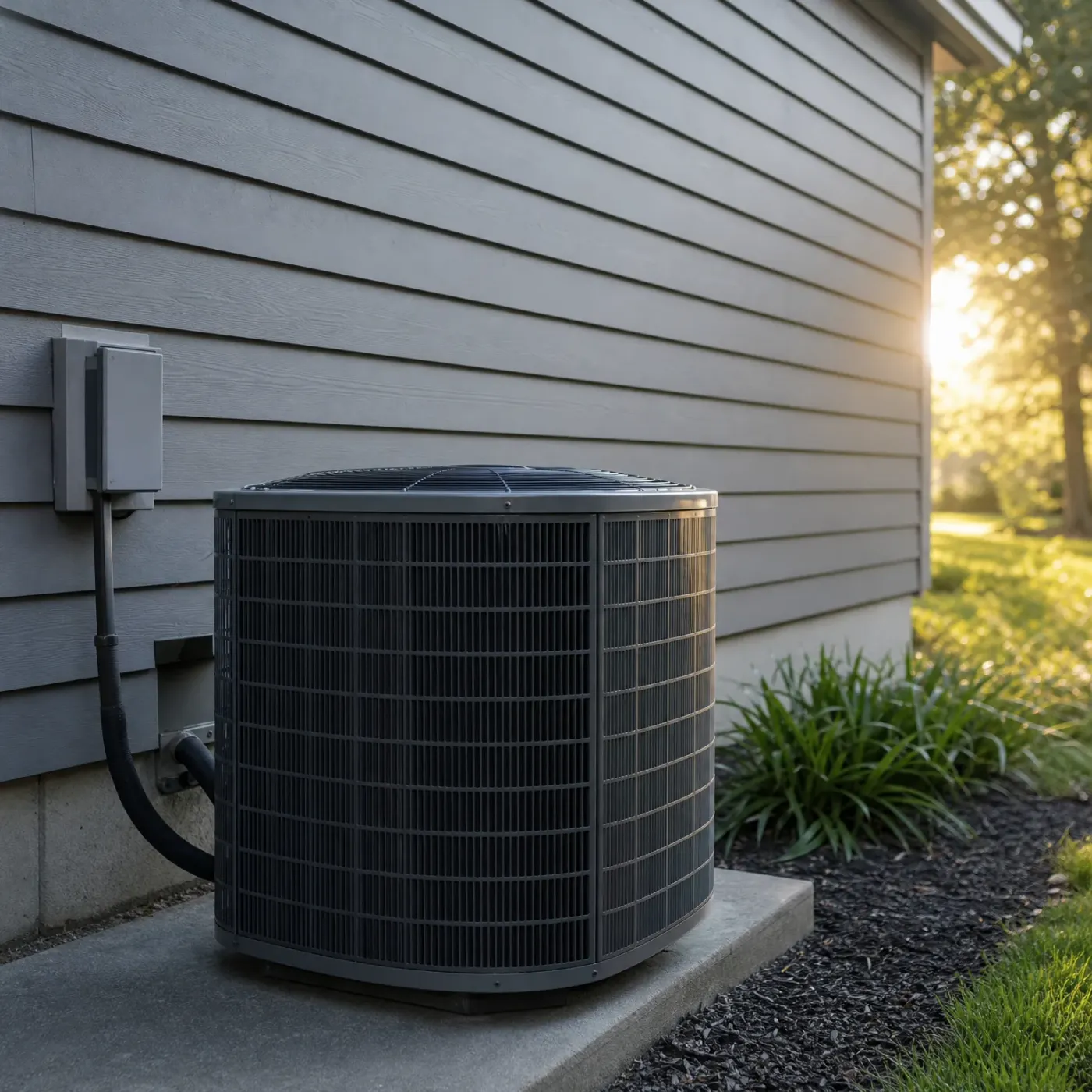
An outdoor air conditioner condenser unit on a concrete pad beside a gray horizontal-lap-sided house, with an electrical disconnect box and refrigerant line on the wall, grass, shrubs and a tree with low sun behind.

A local pro for your heat pump repair

Fill out one form

Explain the job once and skip repeating it on every call.

Asking costs nothing, and the choice to hire stays yours.