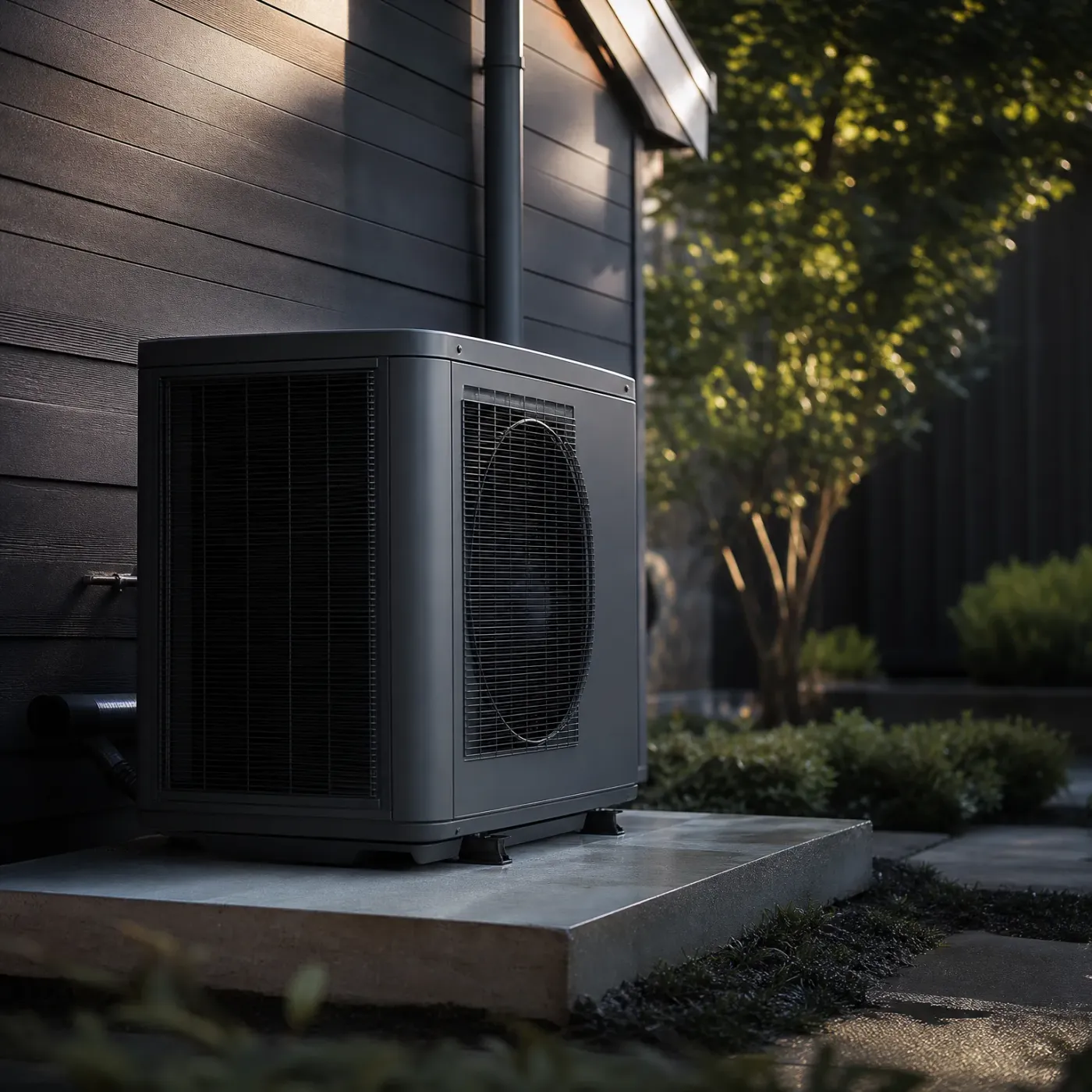
A gray outdoor condenser/heat pump unit with a side fan grille sits on a concrete pad beside a dark horizontal wood-sided house, with shrubs and a small tree nearby.

Hand off the heat pump problem

What defrost mode means on a Colorado heat pump

You've seen your heat pump pause and heard the fan run while frost melts off the outdoor unit, and you're wondering if that's normal or if something's wrong. This page covers what defrost mode is, when it should kick in, and what it means if yours is running it too often or not clearing the ice at all. If something's off, you can send in your details and a local contractor who works on heat pumps all winter will take it from here.

Let a pro reach out

Defrost mode is your heat pump melting off the frost that builds up on the outdoor coil when it's cold outside. Colorado winters put that coil through a lot, since the colder and more humid the air, the faster frost forms on it. When the system senses enough frost, it reverses itself for a few minutes, sending hot refrigerant outside to melt it, while the outdoor fan shuts off and the indoor system may run on backup heat to keep the air from feeling cool. That's normal. What's not normal is a unit stuck in defrost, cycling into it too often, or an outdoor coil still caked in ice after the cycle ends. Those point to a problem with the defrost sensor, the reversing valve, or low refrigerant, and they're worth having a contractor look at before a hard freeze catches the system unable to heat your home at all.

A gray outdoor heat pump unit with a large fan grille sits on a concrete pad beside a house with horizontal lap siding, next to a green shrub, mulch bed, and lawn.
A short defrost cycle, maybe ten minutes, then the fan kicks back on and the coil's clear again.
A weathered outdoor condenser unit on a concrete pad beside a house with white horizontal vinyl siding, with refrigerant lines and conduit running to a wall-mounted electrical box.
Frost that never fully melts, or a cycle that keeps repeating every hour, means the system's losing the fight.
A woman in a gray sweatshirt with her hair pinned up sits in a living room looking off to the side, with a pale sectional sofa, cushions, a potted plant, framed wall art and a large window behind her.
A woman with long wavy brown hair in a gray top and dark cardigan stands near a window, looking to the side, with a living room, fireplace and round mirror blurred behind her.
A woman with curly dark hair in a grey long-sleeved top sits on a grey couch with patterned cushions, looking off to the side in a softly lit living room.
A woman in a gray knit sweater with her hair in a bun sits on a couch indoors, smiling and looking off to the side, with a dining area and framed picture blurred in the background.

Normal Defrost or a Problem?

Normal defrost

  • The outdoor fan stops, you might hear a whoosh or hissing as the reversing valve switches, and steam can rise off the coil as frost melts.
  • It happens on its own schedule, usually triggered by a sensor reading the coil temperature, not by you doing anything.
  • Indoor air may feel cool or blow less warm air for those few minutes, since the system is briefly running in cooling mode to generate heat at the coil.
  • Once the coil's clear, the unit switches back to heating and the outdoor fan starts again within a few minutes.
  • This happens more often on cold, damp days and barely at all on dry, sunny ones, which tracks with how fast frost builds.

A system in trouble

  • Defrost cycles start running back to back, with little or no heating in between, and the coil never fully clears.
  • You see ice building up on the coil, the lines, or the base of the outdoor unit instead of a light, even frost.
  • The outdoor fan doesn't come back on after defrost ends, or it runs constantly without ever stopping to defrost at all.
  • Indoor temperatures keep dropping even though the system seems to be running, since it's spending more time thawing than heating.
  • A defrost cycle that stretches well past the usual ten minutes points to a sensor, valve, or control board that isn't doing its job.
A dark bedroom with an unmade bed and pillows beside a curtained window showing rain-streaked glass and palm foliage outside.

It's January, past ten at night, and the living room is colder than it should be. You've got a blanket pulled up to your chin on the couch, and you can see your breath isn't quite fogging, but it's close. Outside, the heat pump is running loud, the fan stuck on, no warm air coming through the vents at all. You walk over to the window and look at the outdoor unit. It's coated in ice, thick along the coil, not melting, not even trying to. You've seen it defrost before, quick and quiet. This isn't that. The thermostat reads sixty-four and dropping.

Why does your house feel cold when it's defrosting?

During a normal defrost cycle, the indoor air coming out of your vents turns cool for a few minutes, sometimes with a breeze that feels almost cold on your skin. That's expected and it passes once the coil clears. What's different is when the house keeps losing ground over an hour or more, the thermostat reading drops two or three degrees below your setting, and everyone starts reaching for blankets or layering up before bed. If someone in the house is older, very young, or sick, that steady drop matters more than it would otherwise. A heat pump stuck defrosting too often isn't just annoying. It's not heating your house while it runs, and on a cold Colorado night, that adds up fast.

An outdoor air conditioning condenser unit on a concrete pad beside a house with light horizontal siding and a concrete block foundation, with bare soil and small green plants around it.
Before you get your heat pump repair
A gray outdoor condenser unit on a concrete pad beside a white horizontal-siding house, with refrigerant lines and conduit running to a wall-mounted disconnect box, bare soil in front and a green shrub at left.
After you get your heat pump repair
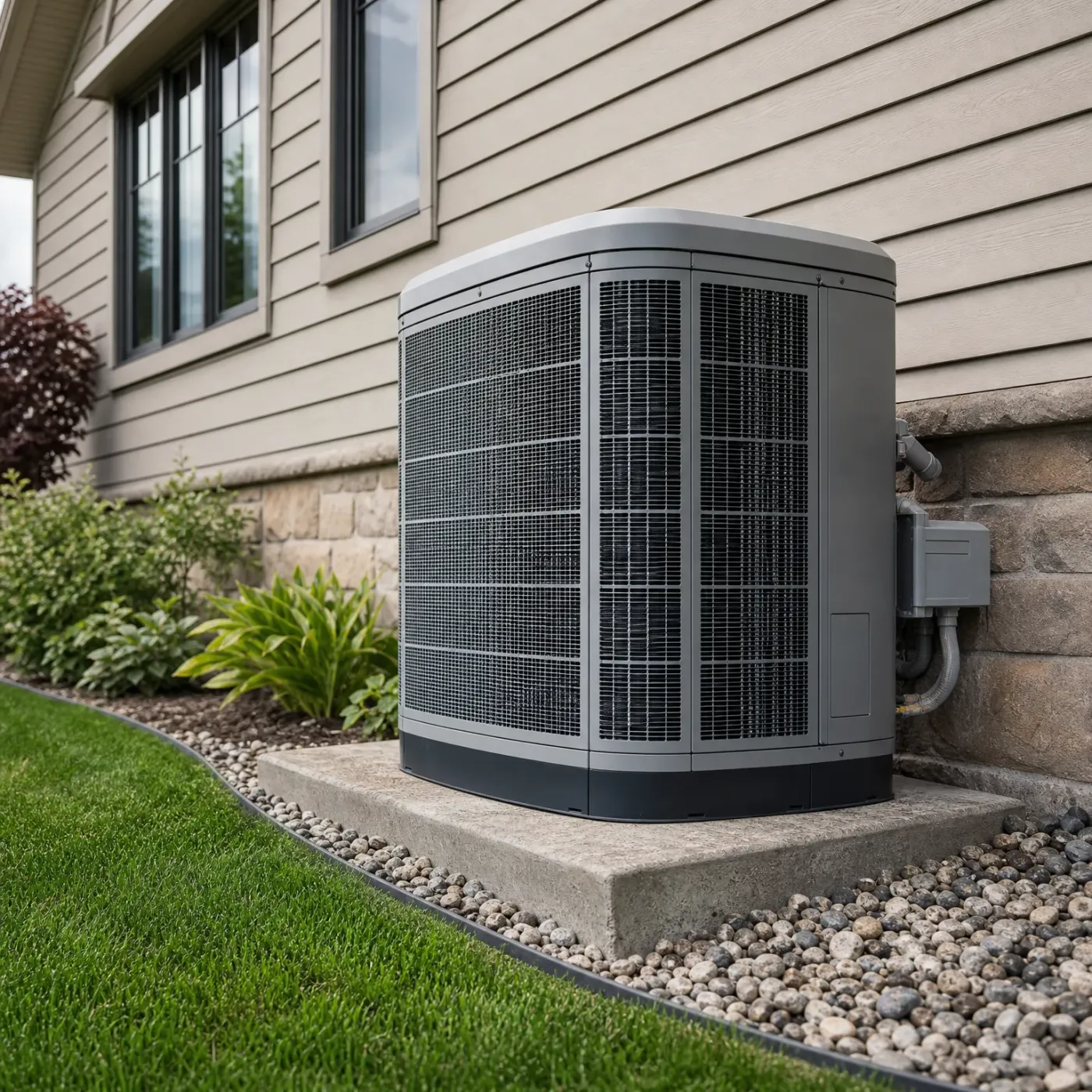
A gray outdoor condenser unit on a concrete pad beside a house with horizontal lap siding and a stone foundation, with a lawn, shrubs and decorative gravel nearby.

Send one request and you're done looking

Your request stays with one local pro.

Send the request today and let a heat pump pro reach out to you.

Find a licensed pro

No fee to send it, and nothing to sign.

Why does my heat pump switch to emergency heat when it's defrosting?

You've noticed the thermostat shows "emergency heat" or "aux heat" lit up right around the time the outdoor unit is defrosting, and you're not sure if the system tripped into backup mode because something failed, or if that's just part of what defrost does on a cold night.

It's running backup heat to cover the few minutes the heat pump can't, not a sign of a breakdown

During defrost, your heat pump actually reverses and pulls heat from inside the house to melt the frost outside, so for those few minutes it's not heating your home at all. The system switches on your backup heat, usually gas furnace heat in most Colorado homes, to cover that gap so the air coming out of your vents doesn't go cold. Once the coil's clear and the system switches back, the backup heat shuts off on its own. If you're seeing emergency heat stay on well past the defrost cycle, or it's kicking in outside of defrost entirely, that's the part worth paying attention to.

A gray outdoor condenser unit on a concrete pad beside a beige vinyl-sided house, with a wall-mounted disconnect box, flexible conduit, mulch bed, shrubs and a concrete walkway in front.

A coil that's clearing fine

The coil looks like this when the system's keeping up: clean grille, clear lines, nothing sitting on top of it. Frost comes and goes on its own schedule and the fan clears it in minutes. Nothing around the base holds moisture against the cabinet.

A weathered gray outdoor condenser unit on a concrete pad beside a house with horizontal vinyl siding, with conduit, refrigerant lines, and an electrical disconnect box on the wall behind it.

A coil that's losing ground

Years of grime on the grille and leaves piled against the base slow the airflow a heat pump needs to shed frost. A coil that stays dirty like this takes longer to defrost, and some winters it won't clear all the way before ice builds back up.

A woman and a child wrapped together in a thick knitted blanket on a sofa, both with eyes closed, with a lit table lamp and houseplant in the dim background.
A smiling older woman with gray hair in a cream knit sweater stands in a dimly lit kitchen beside a window showing snow outside, with a round loaf of bread on the counter in the foreground.

Power costs 15.69 cents per kilowatt-hour statewide

A heat pump that's stuck defrosting too often is pulling backup heat strips to cover the gap, and those run on electricity at 15.69 cents a kilowatt-hour. A stuck cycle that's fixed quick keeps that cost off your bill instead of adding to it all winter.

EIA-861 2025 statewide residential average

Where that leaves your heat pump

  • Defrost mode on its own, ten minutes or so, is your heat pump doing its job on a cold Colorado night.
  • A cycle that keeps repeating, or frost that never fully clears off the coil, means the system is losing that fight.
  • Emergency heat lit up outside a defrost cycle, or a house that stays cold once the fan comes back on, points to a repair, not weather.
  • A local contractor who services heat pumps through winters here has seen which part usually fails when defrost gets stuck.
  • Sending the request connects you with one licensed contractor working near you, not a string of calls to field.
  • Once that's sent, finding the right person for your unit isn't something you have to sort out yourself anymore.

A heat pump that defrosts for ten minutes and goes back to heating your house is doing exactly what it's built to do on a cold Colorado night. That's the whole answer to what defrost mode means. The trouble starts when that cycle won't finish, when frost keeps coming back faster than the coil can shed it, or when emergency heat kicks on outside the schedule you'd expect. At that point you're not dealing with weather anymore. You're dealing with a part that's failing, something in the reversing valve, the defrost sensor, or the board that controls the timing.

That's not a guess you have to make alone from the couch at ten at night. A contractor who works on heat pumps through winters here has seen this exact failure before, more than once, in homes dealing with the same cold and the same humidity yours does. They know what usually gives out first and what to check before anything else.

Sending the request puts you in touch with one of them, a licensed contractor local to you, not a list of five companies calling back over the next hour. You send it once. From there, finding the right person for your system is off your plate. You've got a houseful of people counting on that heat working, and now someone who knows this equipment is the one sorting out why it isn't.

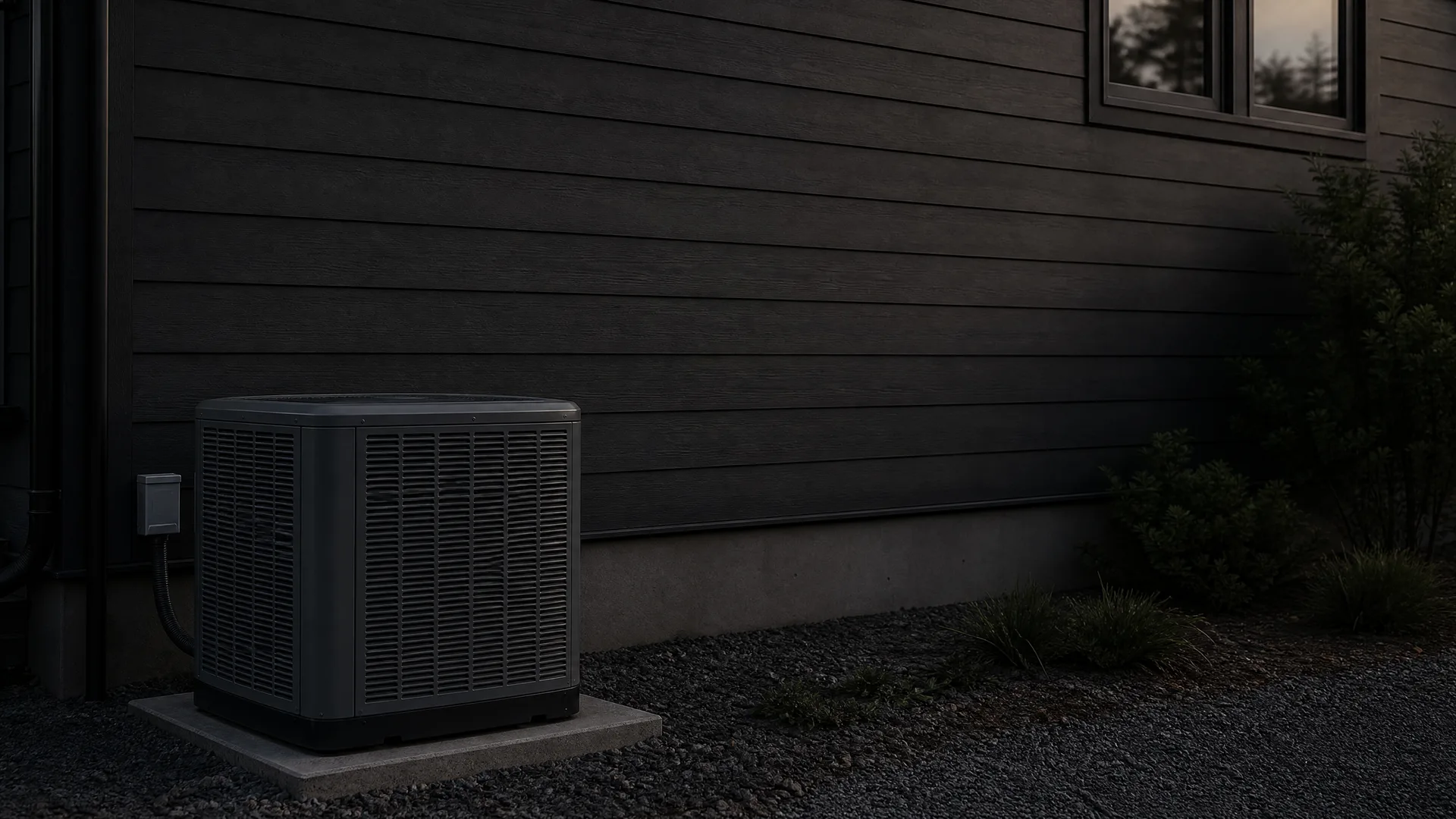
An outdoor condenser unit on a concrete pad beside a dark horizontal-lap-sided house, with gravel, shrubs and a small electrical disconnect box on the wall, in dim light.

Finding a pro stops being your job

Your request goes to one pro, not a list of companies.

Step 1 of 3: Equipment