









What a heat pump tune-up covers in Colorado

Send the form, and lining up the heat pump tune-up stops being yours to chase.

I'm done searching

What does a heat pump tune-up cover in Colorado?

Your heat pump works both sides of the year here, pulling double duty on heat in the winter and cooling through the hot, dry summer. Before you book anything, you want to know what's actually getting checked, not just a vague promise that someone will "service the unit." You're thinking ahead to next season, not reacting to a breakdown, so you want the real list of what a tune-up looks at.

A tune-up checks the parts that let your heat pump switch between heating and cooling without strain

A tune-up covers the refrigerant charge, the reversing valve that switches the system between heat and cooling, the outdoor coil, the indoor coil, the blower motor, and the electrical connections and controls that tell the system when to switch modes. A technician also checks the thermostat settings and the defrost cycle, since a heat pump here has to shed frost and keep working through cold mornings. Because your system runs on both ends of the year instead of sitting idle for half of it, these parts get more hours of work than a furnace or an AC-only setup would see, and that's what the tune-up is checking for: the switching, the charge, and the coils that handle the heat in a dry summer and the cold on the other side of it.

  1. Check refrigerant charge and pressures on both the indoor and outdoor coils

  2. Inspect and tighten electrical connections at the contactor and terminals

  3. Test the reversing valve to confirm it switches between heat and cool

  4. Clean the outdoor coil so it can shed heat properly in summer

Spring Tune-Up vs. Fall Tune-Up

Spring tune-up

  • Catches a weak capacitor or low refrigerant charge before the cooling side has to carry the full heat of a Colorado summer.
  • Lets the reversing valve get tested under milder loads, so a sticking valve shows up before it's switching every day.
  • Clears pollen and cottonwood debris off the outdoor coil before it packs in tight from months of airflow.
  • Gives a contractor time to order a part if something's worn, instead of waiting on it during the first 100-degree week.
  • Checks the thermostat settings against a system that's about to flip from heating to cooling duty.

Fall tune-up

  • Confirms the heat pump can still pull warmth from outside air once temperatures start dropping toward freezing.
  • Checks the defrost cycle, which only runs in cold weather and can't be tested properly in July.
  • Inspects the backup heat strips or furnace that kick in on the coldest nights, since those sit unused all summer.
  • Tightens electrical connections that loosened from a full summer of the compressor cycling on and off.
  • Clears the outdoor coil of leaves and grass clippings before snow and ice seal them in place for winter.
A man in a gray sweater reclines in a brown leather armchair with his eyes closed, beside a wooden side table holding a mug, a folded newspaper and a potted plant, with a bookshelf and sunlit window behind him.
A man with greying hair and a dark sweater leans back on an armchair with his eyes closed and a slight smile, in a living room with a bookshelf, plant, folded newspaper and mug on a wooden table.
A man in a gray fleece jacket sits reclined in a leather chair with his eyes closed, in a room with bookshelves, a table lamp, a window, and a desk holding a folded newspaper and a dark mug.
A bearded man in a gray fleece pullover sits with eyes closed in a brown leather armchair in a living room, with a floor lamp, bookshelf, potted plants, a side table holding newspapers and a dark mug, and a bright window behind him.

Let someone else find the pro

Fill out one form instead of calling around for a heat pump tune-up.

You're not committing to anything by asking.

What Skipping It Costs You

  • A heat pump skipped in spring often shows a weak capacitor or iced-over outdoor coil once summer heat sets in.
  • A reversing valve that sticks mid-season can leave your house blowing cool air on a cold morning until someone diagnoses it.
  • Low refrigerant charge makes the outdoor unit run longer to hit the same temperature, and that shows up on your power bill.
  • A dirty outdoor coil loses its grip on Colorado dust and cottonwood fluff, cutting how well the system sheds heat in summer.
  • Loose electrical connections at the contactor can cause a no-start on the hottest day of the year, not the mildest one.
  • Without a seasonal check, small wear goes unnoticed until it forces a repair call in the middle of a heat wave or cold snap.

A heat pump that never gets a seasonal check doesn't fail all at once. It wears down one part at a time, and you find out when the part finally gives. That outdoor coil sitting under a layer of dust and cottonwood fluff all summer isn't shedding heat the way it should, so the unit runs longer to do the same job, and the extra runtime lands on your power bill whether you notice it or not. Low refrigerant charge works the same way, quietly, for months, before anyone catches it. The reversing valve is the part that costs you comfort directly. When it starts to stick, it can leave the house blowing cool air on a morning that's thirty degrees outside, and you won't know why until someone opens the unit up. Loose connections at the contactor pick their moment too, and it's rarely a mild April afternoon. It's the hottest day in July or the coldest night in January, because that's when the system is working hardest and a weak connection finally lets go. None of this is dramatic on its own. A tune-up catches it early, while it's still an adjustment instead of a repair bill and a day without heat or air.

An outdoor air conditioning condenser unit with a top fan grille sits on a concrete pad beside a house with horizontal siding and a concrete step.
Before you get your heat pump maintenance
A gray outdoor condenser unit on a concrete pad beside a house with horizontal lap siding, a conduit and disconnect box on the wall, a shrub with white flowers at right and evergreen foliage at left.
After you get your heat pump maintenance
A beige outdoor air conditioning condenser unit on a concrete pad beside a house with horizontal vinyl siding, with refrigerant lines and a disconnect box on the wall, surrounded by dark mulch and a green shrub at left.

Running the way it should

This is a heat pump holding steady, cycling on and off when the thermostat calls for it. The coil stays clear, the pad is level, and the line to the disconnect box is intact. Nothing about it is working harder than it has to.


An outdoor air conditioner condenser unit on a concrete pad beside a house with horizontal lap siding, with a shrub to the left, bare dirt in front, and conduit and a metal disconnect box on the wall.

Working against something

Here the same kind of unit is losing ground. A coil caked with mulch or dust, a weak capacitor, or a low charge makes it run longer to hit the same temperature. It may still cool the house, but it's spending more to do it.

A gray-haired man with a beard in a blue button-placket shirt reclines on a couch with his eyes closed, beside a sunlit window with a green plant.
A woman in a cream knit sweater sits in an armchair with her eyes closed near a window showing yellow autumn foliage, with a mug on a round wooden side table beside her.
An outdoor condenser unit on a concrete pad beside a gray lap-sided house, with an electrical disconnect box and conduit on the wall and shrubs with mulch to the right.
A clean coil and a clear pad mean the unit isn't fighting dust or debris to move heat in Colorado's dry air.
An outdoor air conditioning condenser unit on a concrete pad beside a house with horizontal siding above a brick foundation, with a flexible conduit running to a wall-mounted disconnect box.
Weathering and dust like this make the coil work harder to do the same job, whether it's July or January.

Power costs 15.69 cents per kilowatt-hour statewide

At 15.69 cents per kilowatt-hour, every degree your heat pump has to fight for shows up on the bill. A dirty coil or low charge makes it run longer to hit the same setting, and in Colorado's dry heat that adds up fast.

EIA-861 2025 statewide residential average

A heat pump tune-up in Colorado covers the refrigerant charge, the electrical connections, the reversing valve, and the outdoor coil, checked while loads are still moderate instead of after a summer afternoon or a cold snap exposes a weak part. That's the whole answer. What's left is finding someone qualified to do it without spending your afternoon on it. Instead of searching through contractors, calling a few, explaining the same thing about your system to each one, then sitting with quotes trying to tell them apart, you send one form. From there, finding a licensed contractor near you stops being something you have to manage. You already know your heat pump runs both sides of the year here. What you've read above tells you what gets checked and why the timing matters. The rest, getting someone out to do it, is the part you no longer have to carry on your own.

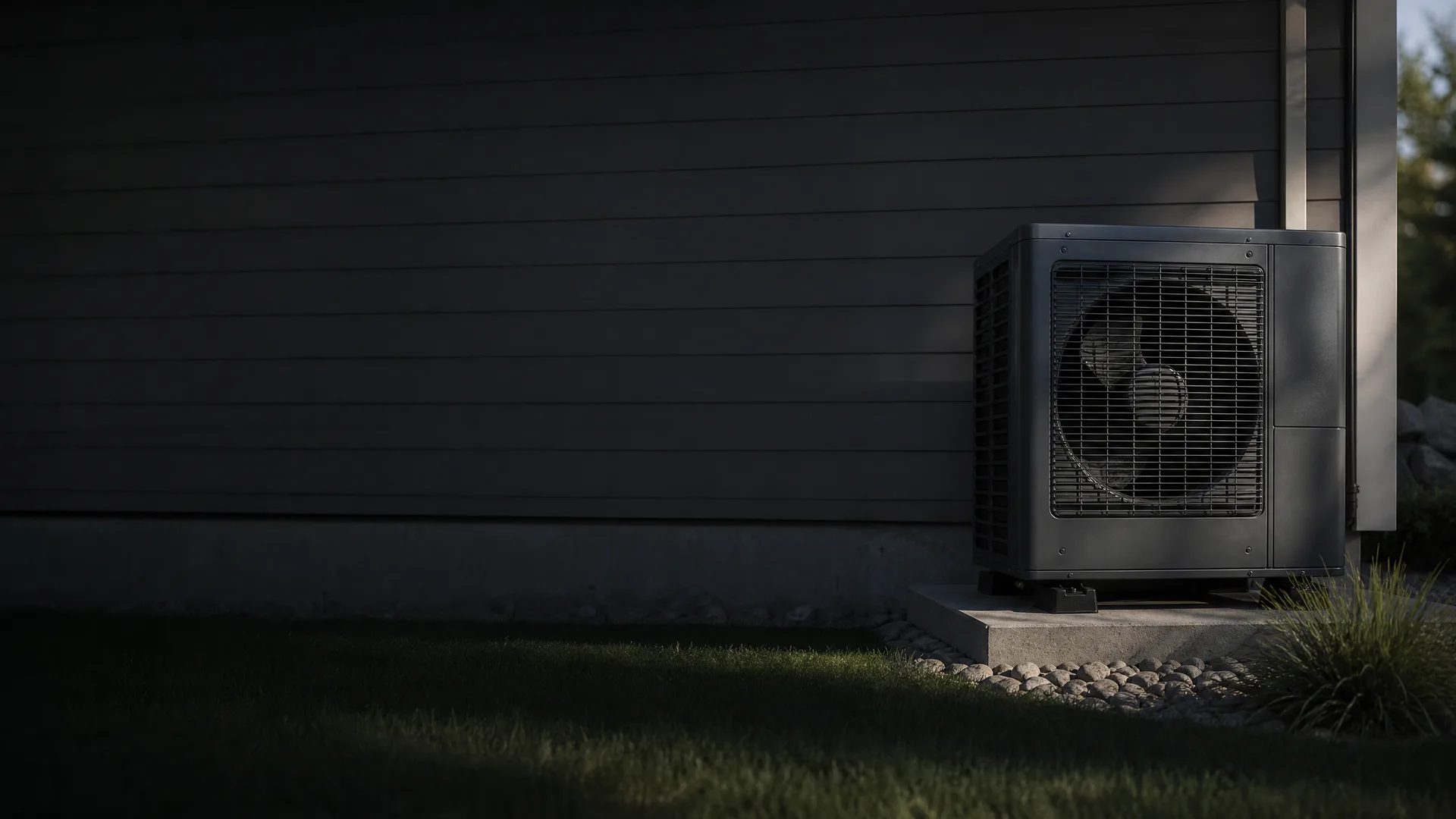
An outdoor air-source heat pump unit with a large fan grille stands on a concrete pad beside a dark horizontal-slat clad house wall, bordered by gravel, grass and an ornamental grass clump.

One request and it's handed off

Skip calling around to set up a heat pump tune-up.

Step 1 of 3: Equipment