Profile view of a bearded man wearing a dark green baseball cap and a dark gray T-shirt against a plain light background.

Is a cold-climate heat pump worth it in Colorado

Step 1 of 3: Equipment

Is a cold-climate heat pump worth it in Colorado?

You've already got a heat pump, or you're looking at one for a Colorado home, and you keep hearing that regular heat pumps lose steam once it gets cold. You want to know if the cold-climate version is actually built for what winter here does, or if that's just a label that costs more without doing much differently.

Yes, if you want to keep running on the heat pump through a Colorado winter

A standard heat pump starts losing capacity as the outdoor temperature drops, and below a certain point it can't pull enough heat from the air to keep up. A cold-climate heat pump uses a different compressor design that keeps producing heat well below freezing, which matters here because Colorado winters stay cold for months, not just a few nights. Most homes in Colorado heat with gas, and that furnace is still the backup for the coldest stretches. The heat pump handles the milder days, which in most Colorado winters is most of them, and the furnace picks up the rest. Sized and installed correctly for your house, a cold-climate unit keeps that split working in your favor instead of leaning on gas more than it should.

A gray outdoor condenser unit sits on a concrete pad beside a house with horizontal lap siding, with a wall-mounted disconnect box and refrigerant lines, mulched beds and a shrub nearby, and a concrete walkway in the foreground.

Running the way it should

A cold-climate heat pump should look like this: sitting steady on its pad, lines and conduit running clean to the disconnect, no ice built up on the cabinet even on a cold morning. It keeps pulling heat out of the outdoor air down into single digits, and your gas furnace barely has to kick in.

An outdoor air conditioner condenser unit on a concrete pad beside a light gray vinyl-sided house, with an electrical disconnect box and conduit on the wall and bare soil in the foreground.

A sign something's off

If your unit looks fine but the house won't hold heat once it drops below freezing, or the furnace is running far more than it should, the heat pump isn't doing its job. That usually traces back to the charge, the controls, or how it was set up to work with your furnace in the first place.

A gray-haired man in a dark sweater sits on a light gray sofa in a living room, looking toward a sunlit window with trees outside.
A gray-haired man in a dark blue sweater sits on a light gray sofa in a sunlit living room, looking off to the side, with a potted plant, shelving unit, and large glass doors behind him.
A bearded man with graying hair in a dark green sweater sits on a sofa in a living room, looking off to the side, with a sliding glass door and a dim kitchen doorway behind him.
A gray-haired man in a dark knit sweater sits on a light gray sofa in a living room, looking toward a sunlit window, with houseplants, a lamp, and framed art in the background.

A standard heat pump's output drops off fast as the outdoor air gets colder, and below freezing a lot of it hand off the work to electric strip heat or a backup furnace.

A cold-climate model is built to keep pulling heat down into single digits without falling back on that backup, which matters most here since Colorado winters sit below freezing for months at a time.

An outdoor condenser unit sits on a concrete pad beside a house with horizontal vinyl siding, with a gray electrical disconnect box and conduit on the wall and a shrub at left.
Before you get your heat pump installation
A gray outdoor condenser unit on a concrete pad beside a light-colored horizontal-siding house, with a disconnect box and refrigerant line on the wall, ornamental grasses and a shrub in mulch nearby, and a concrete patio in the foreground.
After you get your heat pump installation

How the Compressor Keeps Up

  • A cold-climate heat pump uses a variable-speed compressor that ramps up instead of just switching on and off like a standard unit.
  • That compressor can spin faster in cold weather, which is how it keeps pulling heat when a regular unit would start to fall behind.
  • An enhanced vapor injection circuit feeds extra refrigerant into the compressor mid-cycle, giving it more capacity to work with at low outdoor temperatures.
  • The defrost cycle runs smarter too, clearing frost from the outdoor coil without dumping cold air into the house or running backup heat the whole time.
  • Most installs in Colorado pair the unit with the existing gas furnace as backup, so the furnace only kicks in when the outdoor temperature drops low enough that it's the better option.
  • Sizing this equipment right depends on a proper heat load calculation for your house, not just swapping in whatever tonnage the old system had.

A standard heat pump has a compressor that runs at one speed. It is either on or off. When the outdoor air gets cold, that single speed is not enough to keep up with the heat loss from the house, and the system starts leaning on backup heat earlier than you would like. A cold-climate unit uses a variable-speed compressor instead, one that ramps up its speed as the temperature drops. The colder it gets outside, the harder the compressor works to pull heat out of that air, which is the opposite of what people expect a compressor to do. That ramping is supported by an enhanced vapor injection circuit, which feeds extra refrigerant into the compressor partway through the cycle. That extra refrigerant gives the compressor more to work with right when it needs it, down into single-digit outdoor temperatures. The outdoor coil still frosts up in cold, damp conditions, so the system runs a defrost cycle to clear it. A cold-climate unit manages that defrost without blowing cold air through your ducts or handing the whole job to backup heat while it clears. In most Colorado homes, that backup is the gas furnace already in the house, and it only steps in once the outdoor temperature drops past the point where the heat pump is still the better option. None of this works right if the unit is sized off the old equipment's tonnage. It has to be sized off a heat load calculation for your house specifically.

A gray outdoor condenser unit on a concrete pad beside a light green lap-sided house, with a wall-mounted electrical disconnect box, mulch bed with shrubs, river rock, and a paved walkway in the foreground.
Clean coils, clear lines, no ice on the cabinet even when the morning's cold, the kind of running that keeps a Colorado winter heating bill in check.
An outdoor air conditioner condenser unit on a concrete pad beside a house with horizontal lap siding, with refrigerant lines entering the wall and a shrub on bare soil to the left.
Coils clogged like this cut the heat pump's output right when single-digit mornings need it most, and ice creeping up the cabinet is a sign it's losing the fight.

Is your heat pump keeping up on the cold mornings?

You'll notice it first on the coldest mornings. The air coming out of the vents feels cool instead of warm, or the system runs and runs without the house ever quite reaching the thermostat setting. You might hear the backup heat kick on more than it used to, or notice the outdoor unit caked in ice that doesn't clear on its own. If your home heats with gas and the heat pump is just one part of the system, a unit that can't handle single digits means the furnace is picking up the slack more than it should, and your gas and power bills both climb. Left alone through a Colorado winter, a struggling heat pump also wears down faster, since it's working harder for less heat.

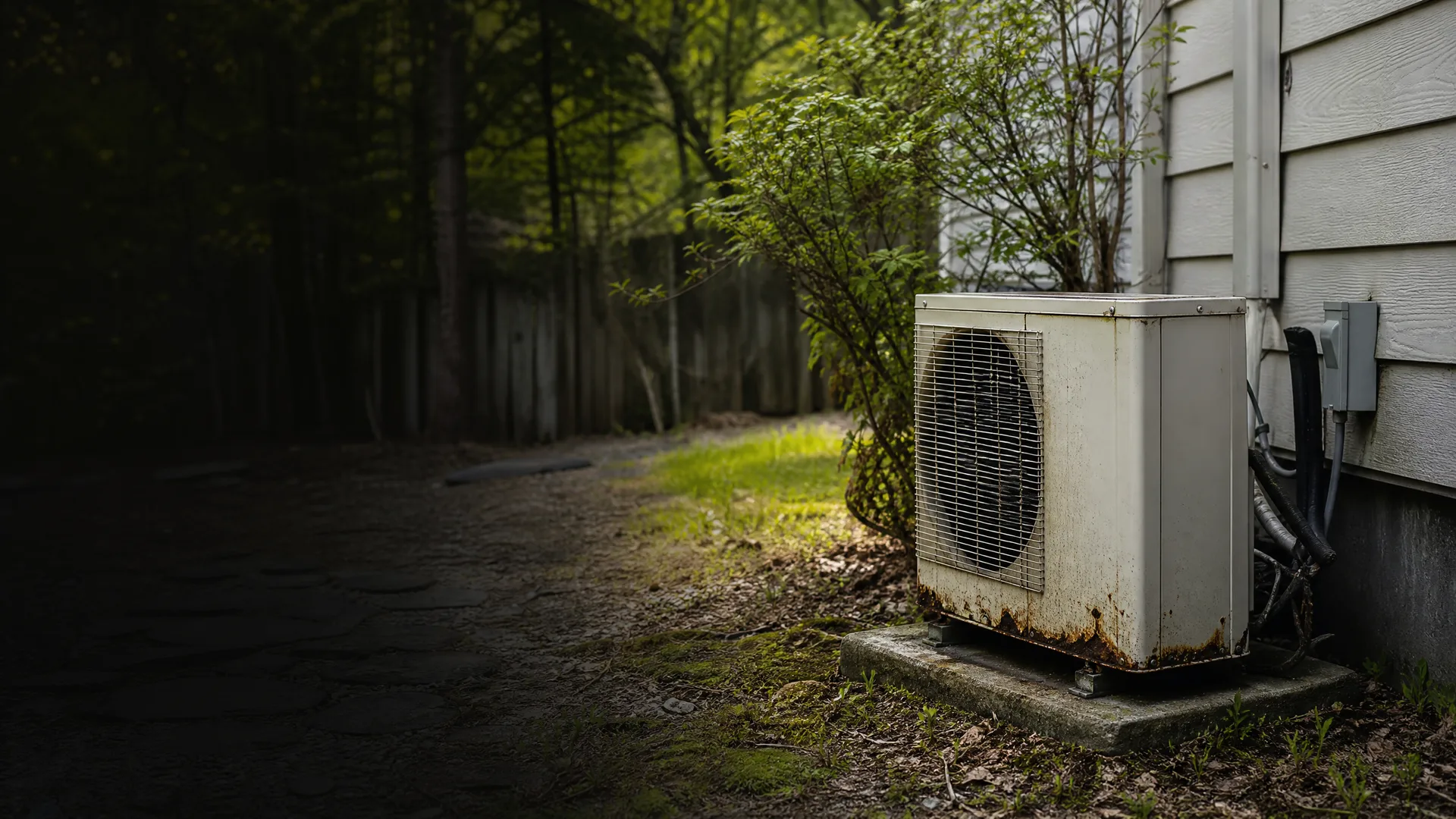
A weathered, rust-streaked outdoor heat pump unit on a concrete pad beside a house with horizontal siding, with shrubs, moss and a dim wooded yard and fence to the left.

Rust has crept along the base of the outdoor unit, a thin orange line where the metal meets the pad. It's a spring morning, the kind that starts cold and clears fast, and you're out getting the trash bins when you notice it. The cabinet looks tired. You crouch down, run a thumb along the seam near the bottom panel, and it flakes a little. The unit's running fine right now, humming the way it always has, but you find yourself wondering how many more Colorado winters it has in it before something inside gives out the way the base is giving out now. You straighten up, bins forgotten for a second, and make a note to get someone out who actually knows this equipment to look at it before next winter, not after.


Done looking for a heat pump pro

Most houses around you heat with gas, so a cold-climate heat pump has to earn its keep on its own, not as a backup running a few weeks a year. Power here is priced about like it is anywhere else, which matters because a cold-climate compressor is doing real work on those single-digit mornings instead of handing off to strip heat. Sizing it right and getting the install done correctly is what decides whether it actually holds its output when the temperature drops, or whether it struggles the way a standard unit would. That's a judgment call best made by someone who installs these in Colorado winters every year and knows which models hold up here and which ones don't. Send the request and the job of finding that person is off your plate. One licensed contractor local to you picks it up, someone who's already seen what works on homes like yours, and you go back to deciding whether the heat pump fits your house instead of chasing down who can tell you.

Keeping the gas furnace

Your furnace handles the cold snaps without any question about output. It doesn't care if it's 10 degrees or 30 outside, it just runs the same way it always has. You already know what it costs to keep around, and you're not adding a second system to the mechanical room or learning a new thermostat routine. The tradeoff is you keep paying a gas bill every winter, and the furnace still needs the same service and eventual replacement a gas furnace needs. You're not getting any cooling benefit out of it either. It just heats.

Adding a cold-climate heat pump

A cold-climate heat pump takes over the heating load itself instead of sitting as a backup to the furnace, and it also covers your summer cooling, which a furnace never could. You're running one system for both seasons instead of two separate ones. The installation has to be sized and set up right for your house, with the controls set so it's actually doing the work on cold mornings rather than handing off early. Done right, you're relying on the furnace less or not at all, but you want someone who installs these regularly in Colorado handling it, since the setup is what decides whether it performs.

Power costs 15.69 cents per kilowatt-hour statewide

At 15.69 cents a kilowatt-hour, every hour your compressor spins costs about the same whether it's September or January. A cold-climate unit works hardest on the coldest mornings, so that's when its draw on your bill shows up the most.

EIA-861 2025 statewide residential average

Running it alongside your furnace

A cold-climate heat pump can share the job with the gas furnace that's already in your house. The heat pump carries the load most of the season, since it's only built to struggle once temperatures drop well below freezing. The furnace kicks in on the handful of mornings a year when outdoor temperatures bottom out, or it can stay wired in as the backup it already is. You get a system that leans on electricity most of the time and falls back on gas on the worst days, instead of running one fuel source year round. Whoever installs it needs to set up the switchover correctly, so the two systems hand off the load instead of fighting each other or running at the same time.

Replacing the furnace outright

Some homeowners pull the furnace and let the cold-climate heat pump carry the whole winter on its own. That asks more of the unit, since there's no gas backup on the single-digit mornings, and it asks more of the installer too, because the system has to be sized and set up to handle your coldest days without help. Done right, it's one system to maintain instead of two, and no gas line running to the furnace. Done wrong, you find out on the first cold snap that the unit can't keep the house at temperature. This is the option where getting a licensed installer who's sized cold-climate systems for Colorado winters before actually matters.

A woman with shoulder-length brown hair wearing a beige knit cardigan sits in a gray upholstered armchair near a window, looking off to the side with a slight smile, with bookshelves blurred in the background.
A woman with her hair in a bun holds a sleeping young child against her chest, both wrapped in a textured beige knit blanket on a sofa in a dimly lit room with a lamp, framed picture, and bookshelf behind them.
A two-story house with gray and light gray siding, white-trimmed windows and a white front door, flanked by deciduous trees, with a partly browned lawn in front under a clear blue sky.

Summer air here doesn't hang heavy. Averaged across Colorado homes, the dew point runs 42°F in June, July and August, which is dry by most standards. A cold-climate heat pump's coil doesn't fight much moisture to cool your house, so it isn't pulling water out of the air the way one would in a sticky climate. The tradeoff is that dry air alone can still feel warm when the sun's out, so you may run the system more than the humidity alone would suggest. That's a summer note on a unit you're mainly counting on for January mornings. Source: NOAA climate normals.

NASA POWER T2MDEW county cells weighted by homes

A cold-climate heat pump is worth it in Colorado if it's sized and installed to actually carry the load down into the single digits, not just rated for it on a brochure. That's the whole answer. The equipment can do what you've read here, the compressor ramping up instead of cutting out, the coils staying clear, the house holding its temperature on a ten-degree morning, but only if whoever sets the refrigerant charge and the controls gets it right the first time. That's a job for someone who works on these year-round where you live, through the dry summers and the cold snaps both, and knows what tends to go wrong with this equipment in this state specifically, not whatever's common in a milder climate. Send the request and you're handed to one licensed contractor local to you, not a handful competing for the call. You'll know where you stand without having to chase it down yourself.

Corner of a room with a white window at left, a white fireplace mantel with dark stone surround at right holding a weathered clay vase of leafy branches, and a cream upholstered sofa with a knit throw and tan pillow in the foreground.
A cushioned window seat with a brown lumbar pillow beside a white-framed window overlooking green trees, next to built-in cream cabinetry with shelves holding ceramic vessels and a wooden bowl.
An entryway with a dark wood console table holding a stone vase of olive branches and a shallow wooden bowl, a woven basket on the lower shelf, a framed landscape print on the wall, and a glass-paned wood door at left.
A wooden vanity cabinet with dark knobs and a beige stone countertop holding a round terracotta vase with leafy branches, beside a wood-framed mirror and a white sink.
Sunlit room corner with wide-plank oak flooring, white baseboard molding and beige walls, a window at left showing green trees, and a dark cabinet at right topped by a stone vase holding a leafy branch.

It's off your list after this

The pro who reaches out is licensed in Colorado.

Hand off my installation

You're not committing to anything by asking.