Tell us about the job
Takes about a minute. No obligation.
Sizing a heat pump for Teller County requires a contractor to work from both ends of the range. Homes in Teller County, CO run heat about eleven months a year, from August through June. As temperatures drop, a heat pump's capacity falls with them, which means a system that looks adequate on paper at milder outdoor conditions can fall short on the coldest nights when the heating load peaks. The installer has to establish where that gap opens and whether supplemental heat needs to be wired in to cover it. Get that calculation wrong and the backup resistance elements run constantly, or the system short-cycles trying to hold setpoint.
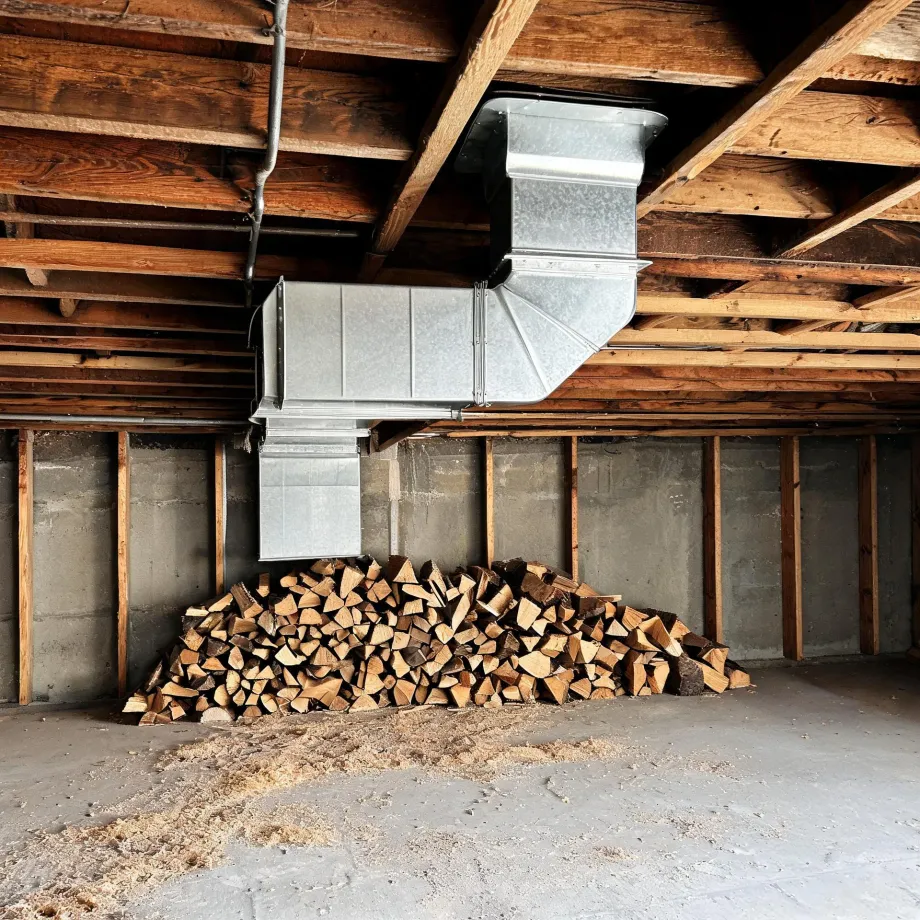
Ductwork laid out for an older forced-air system carries air at different volumes and through different paths than a heat pump wants. Half the homes in Teller County, Colorado were built in 1990 or earlier (2020-2024 ACS 5-year). A contractor quoting a heat pump installation in this county opens the duct system early, checking whether existing runs can carry the airflow the new equipment demands and whether the electrical service has room for the load. Where the ductwork falls short, that work gets scoped and priced before the equipment selection is settled.
What Gets Installed With a New Heat Pump
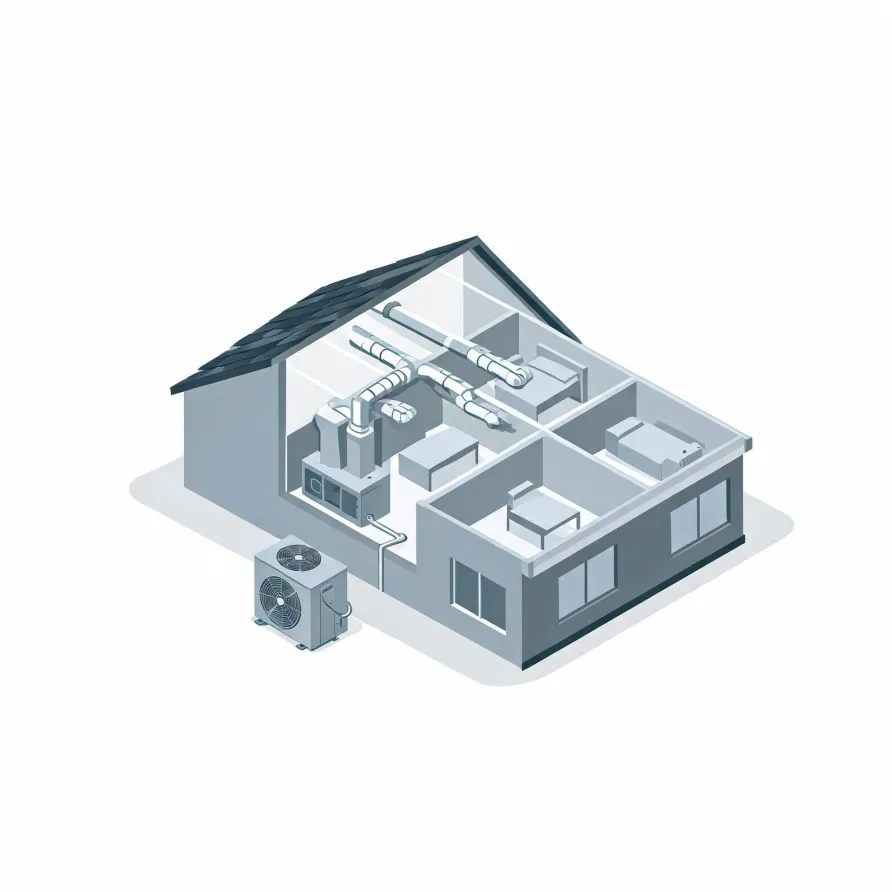
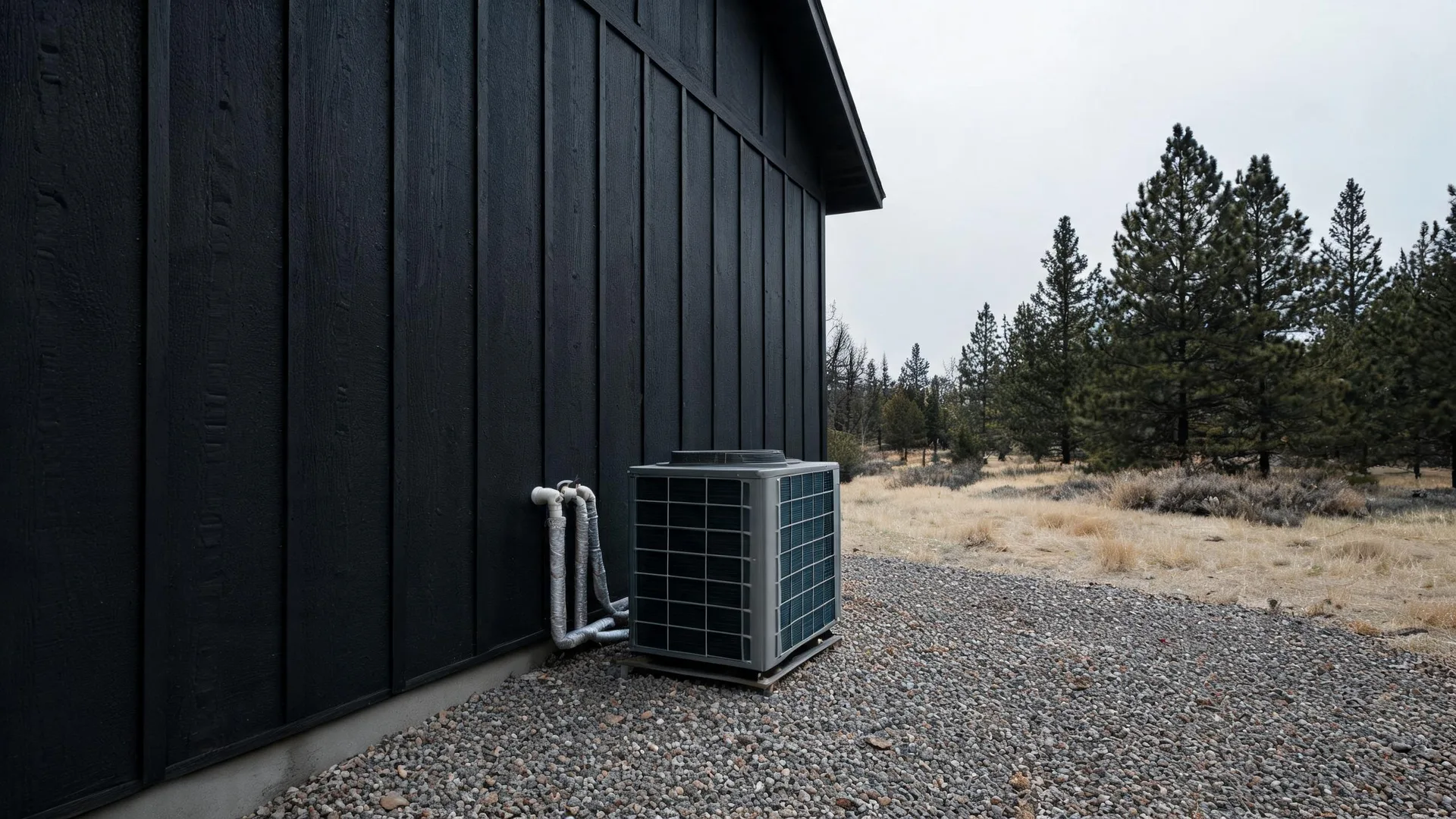
The outdoor unit sits on a pad beside the house and holds the compressor and the condenser coil. These are the parts doing the primary work of moving heat between inside and outside. Inside, the air handler mounts in a mechanical room, closet, or attic and pushes conditioned air through the home.
A refrigerant line set runs between the outdoor unit and the air handler, connecting the two halves of the system through the wall or floor. A thermostat goes on an interior wall where it reads the living space and tells the system when to run.
The drawing shows a typical layout, and a licensed contractor determines exactly what applies to your house.
Get matched in Teller CountyTeller County, by the numbers
249 severe weather events were recorded in Teller County, Colorado between 2015 and 2024.
NOAA National Centers for Environmental Information, Storm Events Database, bulk CSV export, events 2015-01-01 through 2024-12-31.Half the homes in Teller County, Colorado were built in 1990 or earlier (2020-2024 ACS 5-year).
U.S. Census Bureau, 2020-2024 American Community Survey 5-Year EstimatesTeller County, Colorado holds 13,674 housing units (2020-2024 ACS 5-year).
U.S. Census Bureau, 2020-2024 American Community Survey 5-Year EstimatesOwners occupy 81.0% of the occupied homes in Teller County, Colorado (2020-2024 ACS 5-year).
U.S. Census Bureau, 2020-2024 American Community Survey 5-Year EstimatesWeather Stress on HVAC Equipment in Teller County
Teller County's climate puts real load on heating and cooling systems year-round. A heat pump sized and installed for local conditions handles that load better than one spec'd for somewhere else.
249 severe weather events, 2015–2024. Source: NOAA National Centers for Environmental Information, Storm Events Database.